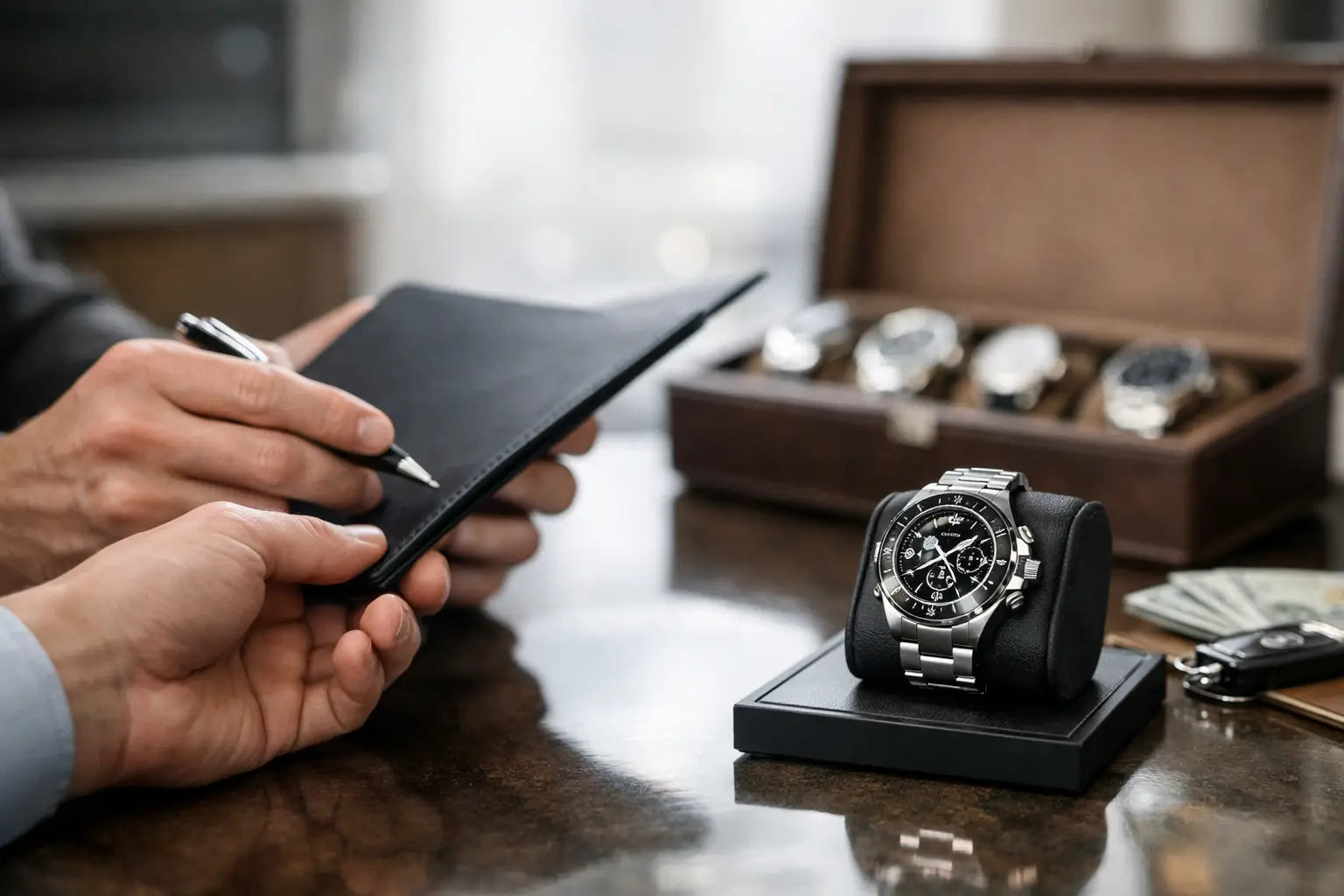
A watch sitting unworn in a safe can be worth thousands, but the route you choose to sell it can make a meaningful difference to what you actually receive. If you are looking into how to consign a watch, the key question is not just what it might sell for, but how much risk, waiting and cost sits between you and that final payment.
Consignment can work very well when you want to push beyond a quick cash offer and are prepared to wait for the right buyer. It is especially relevant for stronger models from Rolex, Patek Philippe, Audemars Piguet, Omega and Tudor, as well as scarce vintage references and enthusiast pieces that need informed marketing. Done properly, consignment gives you access to a specialist dealer’s audience, presentation and sales process without having to deal with timewasters or buyer disputes yourself.
How to consign a watch without losing value
The mistake many sellers make is treating consignment like a simple handover. It is not. You are placing a high-value asset into someone else’s sales pipeline, so the terms matter just as much as the watch itself.
Start with a realistic understanding of the watch’s market position. A current-production steel sports model in strong condition with box and papers will usually attract more immediate buyer interest than a heavily polished vintage watch with unknown service history. That does not mean the second watch should not be consigned. It means the likely timeline, pricing strategy and buyer pool will differ.
Before agreeing anything, ask what the dealer believes the watch can achieve in the current market, what fee or commission applies, whether there are photography or admin charges, and whether the agreed sale price is fixed or can be reduced later. You should also establish who insures the watch while it is in transit, in storage and on display. Clear answers here are a sign you are dealing with a serious specialist rather than a business trying to secure stock first and explain terms later.
When consignment makes sense
Consignment is usually the right route when maximising return matters more than being paid the same day. If your watch is desirable but priced above the level at which a dealer would buy it outright with enough margin, consignment can bridge that gap. The dealer markets the watch, qualifies the buyer, handles the transaction and takes an agreed share once it sells.
This can be attractive for owners of high-value pieces where the spread between trade price and end retail price is significant. It can also suit inherited watches where the seller is less concerned about speed and more focused on achieving a market-aligned result. In those cases, a direct sale may still be useful as a benchmark, but consignment often has more upside.
It depends, though, on the watch and on your priorities. If the market is soft, if the piece is very niche, or if you need funds quickly, waiting for a buyer can become frustrating. A clean, direct purchase offer with no fees and payment within 24 hours may be commercially smarter than holding out for a higher gross price that takes weeks or months to materialise.
Direct sale vs consigning a watch
This is where many sellers get caught by headline numbers. A dealer may say your watch could sell for more on consignment than on direct purchase, and that may be true. What matters is the net figure in your bank after commission and any related costs.
For example, if a watch could be bought outright for £8,500 today, but might sell on consignment for £9,500 with a 10 per cent commission, your net is £8,550 before considering any servicing, polishing or authentication deductions. That is only marginally better, and it comes with delay. If the expected retail sale price is £10,250, the calculation changes and consignment starts to look far more worthwhile.
That is why a strong specialist will talk in straight commercial terms rather than vague promises. You need to compare guaranteed money now against estimated money later. Neither route is automatically better. The right one depends on your watch, your urgency and your tolerance for waiting.
What to check before you sign a consignment agreement
A proper consignment agreement should be easy to read and precise. If the document feels loose, overly broad or open-ended, stop there.
The agreement should state the watch details clearly, including brand, model, reference, serial where appropriate, and any accessories handed over. It should also confirm the agreed asking price or pricing range, the commission structure, the minimum amount you will receive, and under what conditions the price can be revised.
You should also check how long the consignment period lasts and what happens if the watch does not sell. Some businesses ask for exclusivity for a set term, which can be reasonable, but you need to know whether you can withdraw the watch early and whether any charges apply. Storage and insurance responsibility should be written down, not implied.
If servicing or refurbishment is suggested before sale, ask who authorises that work and who pays for it. Light preparation can improve saleability, but unnecessary polishing or non-essential spend can reduce your return, especially on vintage pieces where originality drives value.
Preparing the watch for consignment
Presentation matters, but over-preparing can backfire. A modern watch should be clean, complete and honestly described. Include the box, papers, spare links, receipts and service records where available. These can materially improve buyer confidence and final sale price.
Do not rush into refinishing the case or bracelet unless advised by a specialist who understands your exact model. Collectors often prefer an honest watch with visible wear over one that has been aggressively polished. The same applies to vintage dials, bezels and hands. Originality usually carries more weight than cosmetic perfection.
Take note of any issues before handover. If the watch is running poorly, has replacement parts, moisture damage or bracelet stretch, disclose it early. Hidden problems tend to come out during inspection and can delay the sale or force a price reduction later.
How reputable specialists actually sell consigned watches
A good consignment service does more than place your watch in a display case and wait. It should price the watch against live market demand, photograph it properly, write an accurate description, vet enquiries and handle the buyer from first contact through to payment and delivery.
That matters because the resale market is full of friction. Private platforms expose sellers to low offers, no-shows, attempted chargebacks and arguments over authenticity or condition. A specialist removes most of that. The buyer deals with the dealer, not with you.
This is where an established UK watch buyer with a consignment arm can make sense. A company such as Watch Nest can assess whether direct purchase or consignment is likely to produce the stronger net outcome, rather than forcing every seller into one route. That flexibility is useful because not every watch should be consigned, even when the owner wants the highest possible figure.
Common risks when consigning a watch
The main risk is not that consignment is flawed as a model. It is that terms are often presented in the most flattering way possible.
The first issue is inflated expectations. If a dealer quotes an ambitious sale price just to win your business, your watch may sit unsold while the market moves on. The second is unclear fees. Commission, card charges, listing fees or deductions for preparation can erode the final number quickly.
The third is poor insurance and weak process. A valuable watch should be fully insured in transit and while held by the dealer. There should also be a proper intake procedure and clear paperwork. Finally, there is the risk of delay. Even strong pieces can take time if priced at the top of the market.
These risks do not mean you should avoid consignment. They mean you should choose carefully and ask direct questions.
How to choose the right company to consign with
Look for a specialist that understands both mainstream luxury watches and more niche references. Broad market knowledge matters because buyers do not all shop the same way. A vintage Omega Speedmaster, a modern Rolex Datejust and a Grand Seiko appeal to different audiences and need different sales handling.
You should also look for a business that can explain its valuation logic clearly. If it cannot justify the expected selling range with reference to current demand, condition and set completeness, the appraisal is not doing much work. Trust is built through clarity, not sales language.
Finally, consider practicalities. Is the process insured? Can you consign in person or by insured post? How quickly are updates provided? How and when are proceeds paid after sale? The right service should feel controlled, transparent and commercially sensible from the outset.
If you are weighing up how to consign a watch, think less about the biggest headline number and more about the best net result with the least unnecessary risk. The strongest sale is usually the one where price, timing and process are all working in your favour.