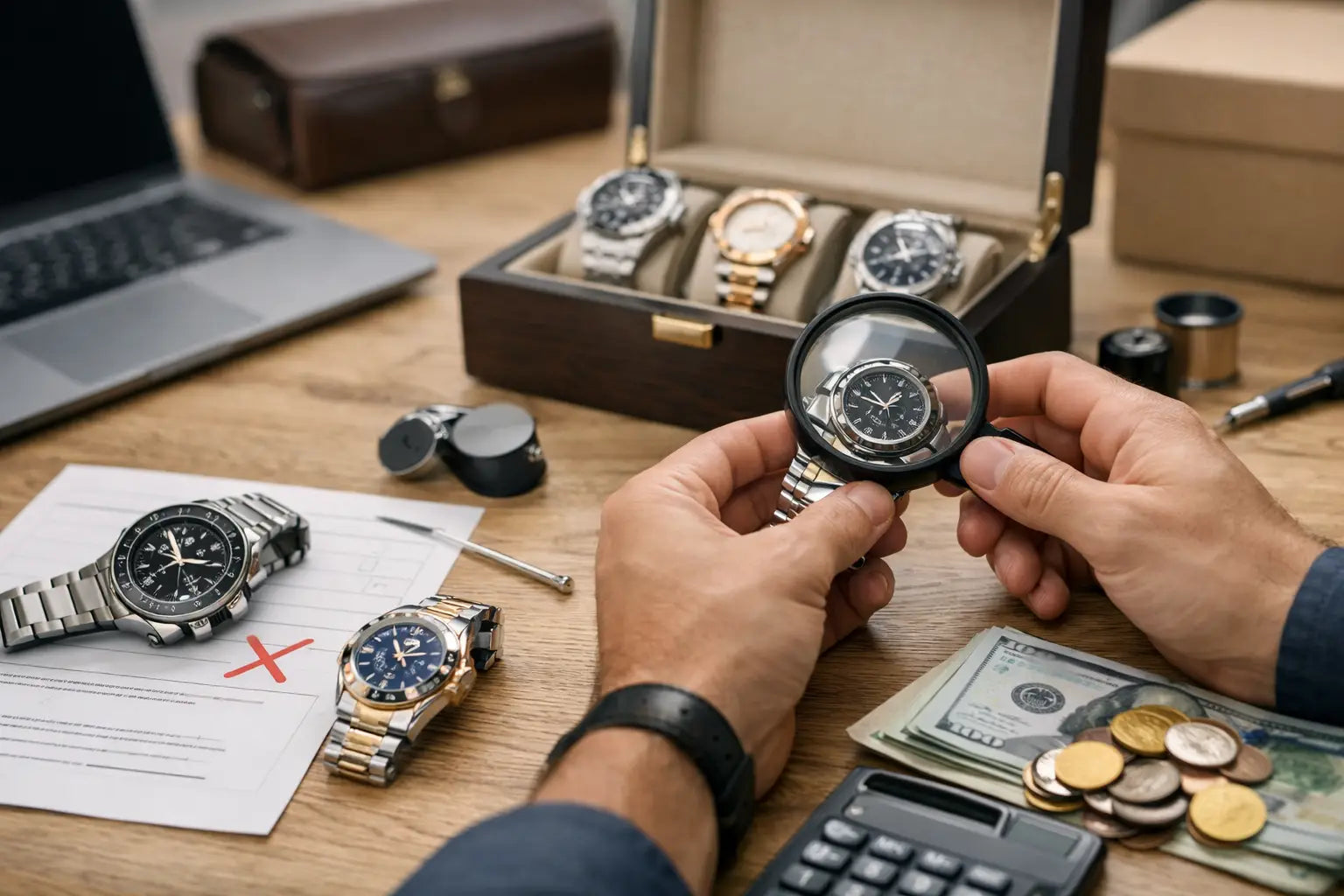
A watch that looks straightforward to sell can lose hundreds - sometimes thousands - in value through one bad decision. Most sellers do not get caught out because the watch is undesirable. They get caught out because they make the top mistakes when selling watches: pricing from guesswork, choosing the wrong route, or accepting risk in exchange for convenience.
If you are selling a Rolex Submariner, an Omega Speedmaster, a Tudor Black Bay, a vintage Datejust, or even a lesser-known enthusiast piece, the same rule applies. The sale process matters almost as much as the watch itself. A strong result usually comes from good preparation, realistic expectations, and dealing with a buyer who understands the market you are selling into.
The top mistakes when selling watches usually start with pricing
The most common error is assuming the internet has already told you what your watch is worth. Sellers often search completed listings, dealer asking prices, or forum posts and treat them as interchangeable. They are not.
An advertised price is not the same as a sold price, and a sold price is not the same as what a seller actually received after fees, returns, payment charges, and negotiation. A dealer may list a watch at a premium because they are offering warranty, preparing the watch for retail, and carrying stock risk. A private seller will not usually achieve the same figure.
Condition also changes everything. A 2022 Rolex GMT-Master II with full set, sharp case lines, original paperwork, and recent service history sits in a very different pricing bracket from the same reference with polished lugs, bracelet stretch, or missing papers. Vintage pieces are even more sensitive. Original dial, handset, bezel insert and bracelet can materially affect value, and replacement parts can reduce collector appeal.
This is why broad estimates are risky. If you price too high, the watch sits unsold and starts to look stale. If you price too low, it sells quickly for the wrong reason. A professional valuation should account for reference, age, specification, condition, provenance, service history and live market demand, not just a quick search result.
Choosing the wrong selling route
Not every seller wants the same thing. Some want the fastest possible payment. Others are prepared to wait longer if it may produce a stronger gross number. One of the top mistakes when selling watches is choosing a route that does not match your actual priority.
Private marketplaces can look attractive because the headline prices appear higher. In practice, that route often brings timewasters, low offers, payment concerns, attempted chargebacks, and arguments over condition after the watch has been delivered. It can work, but it is rarely as simple as the listing makes it seem.
Auction houses suit some rare, unusual or highly collectible watches, especially where competitive bidding is likely. Even then, timing matters, reserve levels matter, and the final result is not guaranteed. Fees can also take a noticeable bite out of the proceeds. For a mainstream modern watch, auction is not always the strongest route.
A direct specialist buyer is usually the right fit for sellers who value speed, certainty and a clean transaction. A consignment route can make more sense if the watch has strong retail appeal and the seller is willing to wait for the right buyer. The mistake is not choosing one over the other. The mistake is assuming they deliver the same outcome on the same timescale.
Presenting the watch badly
Good watches sell better when they are presented properly. That does not mean over-polishing them or trying to make them look newer than they are. It means showing them accurately and completely.
Poor photographs create doubt immediately. A dark, blurry image taken on a kitchen worktop tells a buyer very little. Equally, hiding scratches or avoiding close-ups usually backfires, because any serious buyer will ask for more detail or reduce their offer to cover uncertainty. Clear images of the dial, case sides, caseback, bracelet, clasp, paperwork, box and accessories help establish confidence from the outset.
Documentation matters too. Boxes and papers do not always transform value, but for many modern luxury watches they do improve desirability and saleability. Service receipts, original purchase invoice, spare links and authenticity paperwork can all help support a stronger offer. If you have them, present them early rather than as an afterthought.
There is also a balance to strike with cleaning. A gentle wipe with a microfibre cloth is sensible. Aggressive polishing, amateur bracelet refinishing or opening the case is not. Buyers want honest condition, not cosmetic work that raises fresh questions.
Underestimating security and payment risk
A surprising number of sellers focus so heavily on headline price that they ignore transaction risk. That is expensive thinking.
Meeting an unknown buyer with a £10,000 watch, posting it without proper insurance, or accepting a payment method that can later be disputed is not a minor detail. It is one of the costliest mistakes in this market. The right buyer should make the process safer, not more stressful.
For in-person deals, you need a secure environment, proper identification and funds that are fully cleared. For postal deals, the watch should be covered in transit and handled through a process that is designed for high-value items. For remote sales, there should be no ambiguity around inspection, pricing confirmation and payment timing.
This is where specialist buying services have a clear advantage over general marketplaces. A professional process with insured shipping, clear valuation terms and same-day or 24-hour bank transfer removes much of the uncertainty that causes private sellers the most concern.
Misreading what affects value most
Many owners assume brand alone determines the price. Brand matters, but market strength sits at model level, and sometimes at dial, bracelet, year, and even production batch level.
A steel sports Rolex with full set and strong condition will usually attract broad demand. A precious metal dress watch from a prestigious maker may have a higher original retail price but a narrower resale audience. A vintage Omega with desirable originality can outperform a newer watch from a more expensive line. A microbrand may have a passionate following but limited liquidity.
Service history can help, but not always in the same way. For a modern daily wearer, recent manufacturer or specialist service can support confidence. For a vintage collector watch, originality may matter more than heavily replaced components. Polishing is another common blind spot. Some sellers assume a fresh refinish improves value, but over-polishing can soften case edges and reduce collector appeal.
The practical point is simple: market value is rarely based on one factor. The strongest valuations come from someone who understands the specific watch, not just the logo on the dial.
Letting urgency force a weak deal
Urgency is understandable. People sell watches for all sorts of reasons - releasing cash, restructuring a collection, handling an inheritance, funding another purchase, or simply moving on something they no longer wear. But urgency often leads sellers to accept the first offer without checking whether it is fair.
That does not mean the first offer is always bad. A strong direct offer from an established buyer can absolutely be the right decision, especially if it reflects live market conditions and comes with immediate payment. The problem is accepting a vague, pressure-based offer because the process feels tiring.
A credible buyer should be able to explain their valuation clearly. If a watch is priced below expectation because it needs work, lacks accessories, has polished edges, or sits in a soft segment of the market, that should be said plainly. Transparent reasoning builds trust. Pressure does not.
Overlooking the value of specialist appraisal
The broader the market becomes, the more expertise matters. Some sellers assume all buyers view watches in roughly the same way. They do not.
A high street dealer may be comfortable with mainstream stock but weaker on niche enthusiast references or vintage variations. A general pawnbroker may focus on quick liquidity rather than model-specific demand. A specialist buyer who regularly handles Rolex, Omega, Tudor, Patek Philippe, Audemars Piguet, vintage references and collector-led brands is far more likely to value accurately and buy with confidence.
That difference matters when your watch falls outside the obvious. An inherited vintage watch, a discontinued limited edition, a neo-vintage sports model, or a watch with unusual provenance needs informed appraisal. Without it, sellers often receive cautious offers simply because the buyer does not fully understand what they are looking at.
For sellers who want speed without sacrificing confidence, working with a specialist such as Watch Nest can remove much of that friction. The key is not just getting an offer quickly. It is getting one that reflects the real market, comes with no seller fees, and ends in secure payment rather than further negotiation.
Selling a watch well is usually less about finding magic and more about avoiding preventable mistakes. If you take the time to understand your watch, choose the right route, present it properly and insist on a secure, transparent process, you give yourself the best chance of a fast, fair result without unnecessary risk.