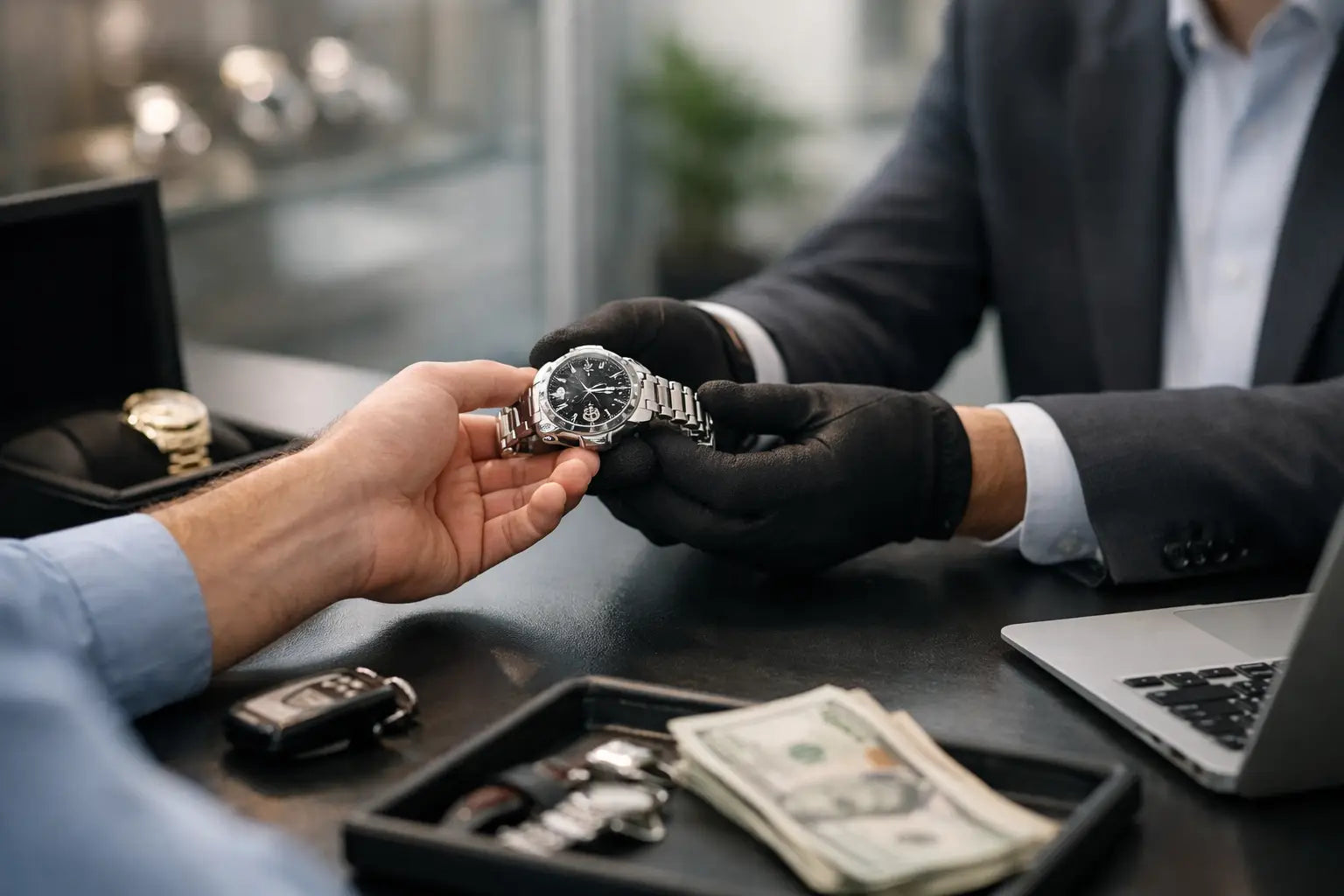
A dealer’s offer is not a guess, nor is it simply a percentage of the retail price. Understanding how dealer watch offers work helps you assess whether a quote is fair, decide whether speed matters more than maximum return, and avoid comparing unlike-for-like selling routes.
When you sell directly to a specialist, you are being offered an immediate purchase price. The dealer takes ownership of the watch, handles the resale work and pays you once the watch has been checked. That is fundamentally different from selling privately or placing a watch on consignment, where you may achieve more but carry more waiting, uncertainty and effort.
How dealer watch offers work in practice
A reputable dealer starts with the watch itself: brand, model, reference, age, condition, specification and provenance. A steel Rolex Submariner, an Omega Speedmaster Professional and a vintage Tudor Prince may all be desirable, but each has a different buyer base, price history and likely resale timeframe.
The initial valuation is usually based on photographs and information supplied by the owner. Clear images of the dial, case, bracelet, clasp, caseback, movement where appropriate, and any damage allow the buyer to identify the reference and estimate condition. The original box, papers, service documents, spare links and accessories should also be mentioned. They do not always transform the value, but they can strengthen a watch’s appeal and make it easier to resell.
A specialist then compares the watch with current transaction evidence, not just ambitious online asking prices. The relevant question is what similar watches are actually changing hands for in the UK market, in comparable condition, with comparable sets. A watch listed at £10,000 is not necessarily selling for £10,000.
If the initial details support the estimate, the dealer makes an offer. Once the watch is received or inspected in person, it is authenticated and checked against the description. If everything matches, payment can be made by bank transfer, often on the same day. If there is a material difference - for example, an undisclosed replacement dial, polished case, missing bracelet link or movement issue - the offer may need to be revised. A professional buyer should explain exactly why.
What a watch dealer builds into an offer
A direct dealer offer reflects what the dealer can realistically sell the watch for, minus the commercial costs and risks of bringing it to market. This is why it will normally be lower than the final retail price displayed in a dealer’s stock.
Those costs can include authentication, inspection, insurance, photography, advertising, payment processing, preparation, warranty exposure, secure storage and VAT treatment where applicable. Some watches also need a service, pressure test, replacement parts or cosmetic work before they can be sold confidently. The dealer is also taking the risk that demand softens or that the watch takes months, rather than days, to find the right buyer.
Liquidity matters too. Popular references with an established market tend to produce stronger direct offers because they are easier to resell. A current Rolex GMT-Master II, Cartier Santos or sought-after Omega Seamaster may have a wide pool of buyers. A rare independent watch, older quartz model or heavily customised piece may require a more specific customer, which can affect the offer even if the watch is interesting.
That does not mean less common watches have no value. It means the valuation must reflect the actual market for that particular example. Strong buyers understand vintage, neo-vintage, micro-brand and enthusiast watches rather than limiting their attention to a short list of headline luxury names.
The details that can move your offer
Condition is one of the biggest variables, but it is more nuanced than a quick polish or a few surface marks. A lightly worn, unpolished vintage watch with an original dial can be more desirable to collectors than an over-restored example. Conversely, a modern watch with deep case damage, a stretched bracelet or moisture damage may need remedial work before resale.
Originality is equally important. Replacement hands, refinished dials, aftermarket diamonds, non-original bezels and incorrect parts can materially reduce buyer confidence. For some models, an original bracelet and correct clasp code matter just as much as the watch head itself.
The following information gives a dealer the best chance of making an accurate first offer:
- The full reference number and, where available, serial number
- Sharp photographs in natural light, including all sides of the watch
- Box, papers, warranty card, service history and spare links
- An honest description of wear, repairs, faults or non-original parts
Why retail price, trade price and private-sale price differ
Owners often see a similar watch advertised online and expect a matching offer. It is understandable, but the figures serve different purposes. A dealer’s advertised retail price includes the costs of selling to the next owner and, in many cases, the reassurance of a warranty and professional aftercare.
A private-sale price can sit between trade and retail, but it comes with a different set of risks. You must create the advert, answer messages, judge whether a buyer is genuine, arrange a safe handover or posting method, and manage any dispute after payment. Marketplace fees, chargeback risks and failed deals can reduce the final amount as well as consume time.
A direct offer is the price of certainty. You know what you will receive, you avoid seller fees and you do not need to wait for an end buyer. For an inherited watch, a collection you no longer wear, or a sale that needs to be completed promptly, that certainty can be worth more than pursuing a higher headline figure.
When consignment may be the better route
Consignment is worth considering when the watch is especially valuable, rare or likely to appeal to a patient collector. Instead of buying the watch outright, the dealer markets it for you and takes an agreed commission after it sells. Your potential return can be higher because the watch is sold closer to retail level.
The trade-off is time. There is no guaranteed sale date, and the eventual result depends on market demand, condition and price positioning. You should be clear on the commission, insurance arrangements, minimum expected net proceeds, whether any servicing costs are deducted, and what happens if you decide to withdraw the watch.
For many sellers, the decision is simple. Choose a direct sale if you want fast, guaranteed funds with no advertising or buyer negotiations. Consider consignment if you can wait and are comfortable exchanging speed for the chance of a higher net return.
How to judge whether an offer is fair
Do not judge a quote solely by whether it is the highest number received. Look at the basis of the offer and the protections around it. Is the buyer clear that the price is subject to physical inspection? Are there any seller fees? Is shipping fully insured? Will payment be made before the watch leaves secure control? Can you visit a showroom or speak to a knowledgeable valuer?
A credible offer should also make commercial sense. If one buyer promises a figure far above every other quote, ask whether it is a genuine purchase offer, an estimate designed to secure the watch, or a consignment projection. These are not interchangeable. The key figure is the amount that reaches your bank account, and the point at which it is guaranteed.
At Watch Nest, the aim is to make that decision straightforward: a free, no-obligation valuation, a clear direct-purchase route and fully insured options for selling in person or by post. The right route depends on your watch and your priorities, not a one-size-fits-all promise.
Before accepting any offer, gather the full set, take accurate photographs and decide what matters most: the highest possible eventual return or a fast, secure payment. With those priorities clear, a dealer quote becomes far easier to assess on its real value rather than its headline number.