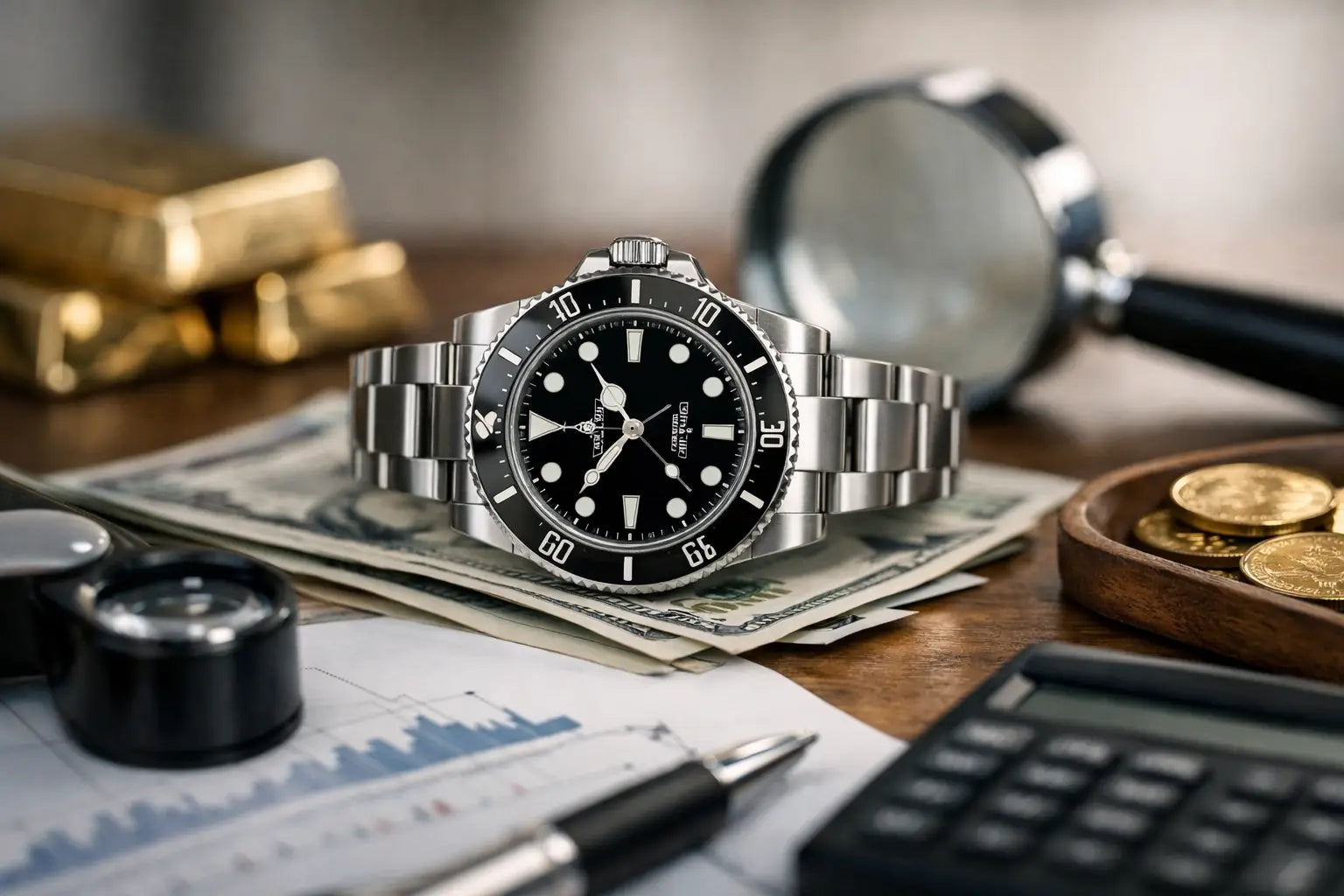
A Rolex valuation can vary by hundreds or even thousands of pounds based on details many sellers overlook. Two watches with the same reference can produce very different offers if one has its original box and papers, a stronger service history, sharper case lines, or a more desirable dial and bracelet combination.
If you are planning to sell, the key is understanding what a buyer is actually pricing. It is not just the name on the dial. A serious valuation reflects current demand, originality, condition, serviceability, and how easily the watch can be resold in the UK market. That is why online estimate tools and old purchase receipts only tell part of the story.
How Rolex valuation works in practice
A proper Rolex valuation starts with identification. The reference number, serial, production period, movement, bracelet code and dial configuration all matter. On straightforward modern pieces such as a Submariner Date, Datejust 41 or GMT-Master II, this is usually quick. On older or more unusual models, the process is more detailed because small specification differences can have a noticeable effect on value.
After identification comes market position. Buyers look at recent selling prices, stock levels, how quickly comparable watches are moving, and whether the model is currently trading above or below retail. Some Rolex sports models remain very strong, but the market is not flat across the brand. A steel Daytona, for example, is judged very differently from a two-tone Datejust or an older Cellini.
Then there is the commercial side. Any direct buyer has to account for authentication, preparation, servicing risk, warranty exposure, and resale margin. That does not mean the offer is unfair. It means a real market valuation for a seller is different from the headline asking prices you may see online. Asking prices are often optimistic. Sold prices, trade appetite and time to sale are what matter.
The biggest factors that affect Rolex valuation
Condition is usually the first major price driver. That includes scratches and stretch, but also the quality of the case, bracelet and bezel. A heavily polished Rolex may look clean at first glance, yet still be worth less than a lightly worn example with stronger original lines. Collectors and knowledgeable buyers pay close attention to over-polishing, replacement parts and dial damage.
Completeness also matters. A full set with original box, warranty card or papers, booklets, tags and links will often perform better than a watch-only example. The gap is not always dramatic, and it depends on the model, but on modern Rolex references it can be significant. For vintage pieces, papers are less common, so originality and overall quality can carry more weight than accessories alone.
Service history can help, but it depends on what was done and who carried it out. A recent Rolex service or a well-documented specialist service is usually a positive because it reduces uncertainty. On some vintage watches, however, replacement hands, relumed dials or swapped bezels may hold value back even if the watch runs well. Mechanical health matters, but originality still counts.
Demand is the other obvious factor. Popular steel sports references tend to attract stronger offers because buyers know they can place them quickly. More formal or less sought-after models can still have solid value, but they may not command the same percentage of retail or online asking prices. This is where realistic expectations help.
Which Rolex models usually hold value best
In broad terms, steel professional models remain among the strongest performers. The Submariner, GMT-Master II, Daytona, Explorer and certain Sea-Dweller references are consistently liquid in the secondary market. That does not mean every version commands a premium, but these families are usually easier to value and easier to sell.
Datejust and Oyster Perpetual models can also perform very well, especially in popular dial colours, balanced case sizes and wearable configurations. A standard reference in a less fashionable size may still sell well, just not with the same urgency as a high-demand sports piece.
Vintage Rolex is a separate category. Here, the valuation can change sharply depending on originality, rarity, dial type, bracelet period, matching parts and provenance. One honest vintage GMT-Master with the right ageing and components may attract far stronger interest than a shinier example assembled from mixed service parts. That is why vintage watches should always be assessed by a specialist buyer rather than priced by reference alone.
Why online prices often confuse sellers
Many sellers begin with marketplace listings. That is understandable, but listings are not valuations. They are advertisements. A watch can sit online for months at an inflated price and never transact. At the same time, private sellers often underestimate the impact of fees, negotiation, shipping risk, insurance limits and the possibility of a return or payment dispute.
Auction results can be useful, but they also need context. Hammer prices do not include every cost, and auction houses tend to work best for very specific pieces rather than everyday modern Rolex stock. High street jewellers may offer convenience, though not always the strongest return. Specialist watch buyers tend to be more accurate because they price against live market demand and current resale channels.
For most owners, the right question is not, what is the highest number I can find online? It is, what can I realistically achieve, net of risk and delay, from a credible buyer today?
How to prepare for a Rolex valuation
You do not need to overcomplicate the process, but a little preparation helps. Gather the watch, box, papers, spare links, service receipts and any purchase documentation you still have. If you know the reference number, include it. Clear photos of the dial, case sides, caseback, bracelet, clasp and any accessories will also improve the accuracy of an initial estimate.
Be honest about condition. If the watch is running fast, has moisture damage, chipped crystal edges or bracelet stretch, say so early. It saves time and leads to a more reliable offer. The same applies to aftermarket diamonds, custom dials or non-original parts. These modifications rarely help value and can make resale harder, so they need to be disclosed.
You should also decide what matters most to you. If speed, certainty and security are the priority, a direct sale to a reputable specialist is usually the cleanest route. If your watch is unusual and you are prepared to wait for a buyer, consignment may produce a higher return. It depends on the model, your timeline and your tolerance for delay.
Rolex valuation for inherited and older watches
Inherited Rolex watches often come with incomplete paperwork and a lot of uncertainty. That is normal. Many older pieces still carry strong value even without a box or card, provided the watch is genuine and commercially saleable. In these cases, expert inspection is especially important because age alone does not guarantee collectability.
An older Rolex may need a nuanced appraisal. A vintage Datejust in average condition is not valued in the same way as an early Submariner, a matte dial GMT-Master or a rare Explorer reference. Sellers sometimes assume that age automatically adds a premium. Sometimes it does. Sometimes it does not. The details decide the result.
This is also where working with a buyer that understands both modern and vintage stock makes a difference. A broad-market specialist can usually tell you quickly whether the watch suits a direct purchase, needs a more specialist sales route, or would benefit from consignment.
Getting a fair offer without wasting time
A fair offer should be clear, commercially realistic and backed by expertise. You should know whether the figure is based on current market demand, whether there are deductions to follow, and how quickly payment can be made. A professional buyer will not need to hide behind vague language.
For UK sellers, security matters as much as price. Fully insured postage, a transparent inspection process, no seller fees and prompt bank transfer all reduce the friction that puts many people off private selling. That matters whether you are selling one modern Rolex or handling part of an estate.
Watch Nest approaches Rolex valuation with that balance in mind - strong market-aligned pricing, clear communication and a process built to remove delays and disputes. For most sellers, that is what turns an estimate into a confident decision.
The best next step is simple: get your watch assessed on its actual merits, not on guesswork or wishful online pricing. A proper Rolex valuation should leave you with clarity, not more questions.