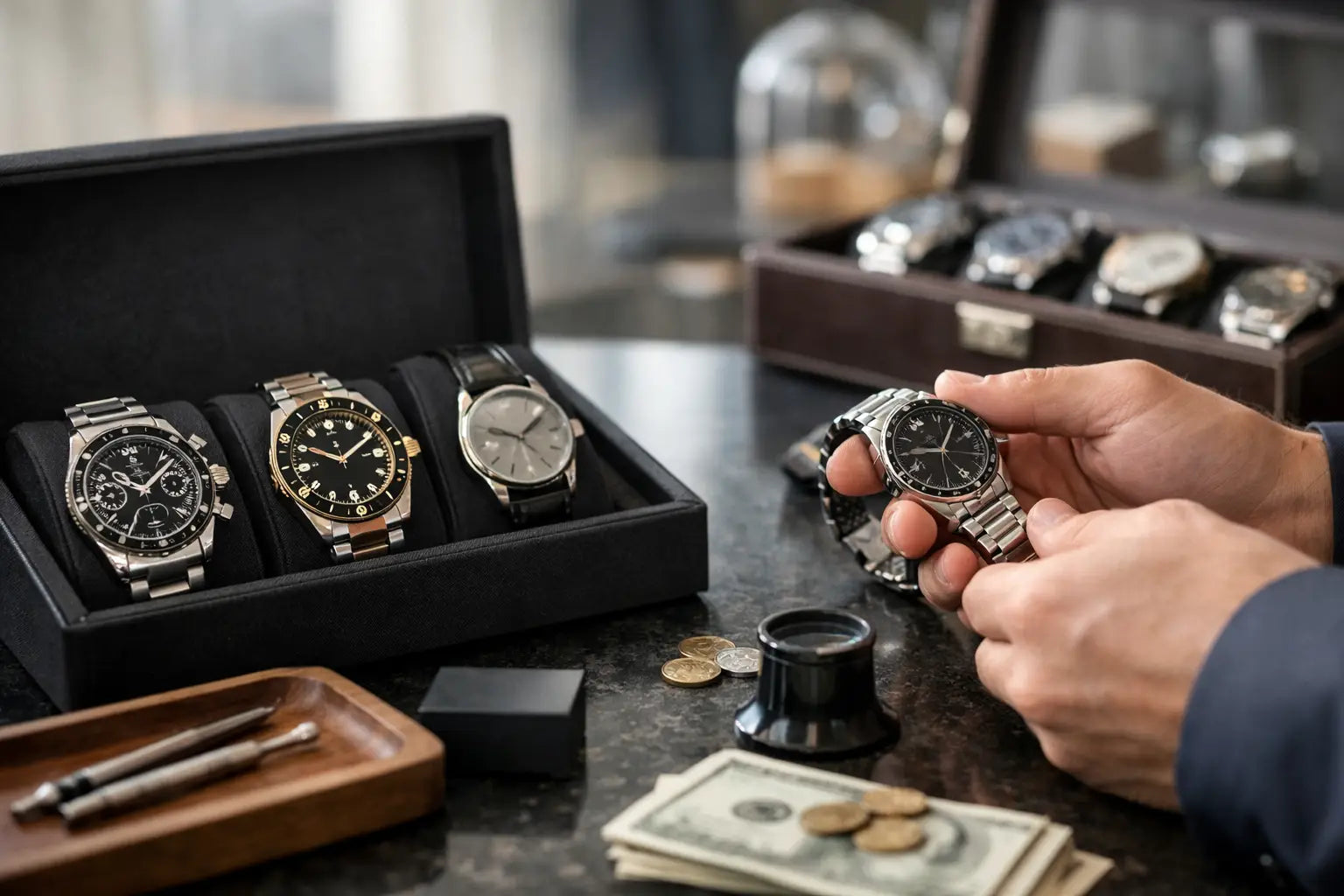
A collection rarely has one obvious value. A steel Rolex may attract immediate demand, while a vintage Omega, a complete Tudor set or a discontinued microbrand piece can need a more considered appraisal. This guide to selling watch collections explains how to establish a realistic figure, prepare each watch properly and choose a sale route that protects both your time and your return.
Whether you are reducing a long-built collection, handling an inheritance or simply moving on from watches you no longer wear, the aim is the same: get a fair market-aligned price without the fees, uncertainty and buyer disputes associated with private sales.
Start by valuing the collection properly
The first mistake many sellers make is adding up optimistic online asking prices. An advertised price is not necessarily a completed sale price, and it may not account for marketplace fees, payment charges, returns or the cost of insured delivery. A proper valuation reflects what a watch is currently selling for, its exact specification and how easily it can be resold.
Treat every watch as an individual asset before considering the collection as a whole. Record the brand, model reference, serial number where appropriate, approximate age, material, dial configuration, bracelet or strap, and working condition. Small details can materially affect value. A Rolex Submariner reference, an original bracelet on a vintage Omega Speedmaster, or a full set with box and papers can make a meaningful difference.
Condition must be assessed honestly. Light wear is expected on a regularly worn watch, but deep case marks, stretched bracelets, moisture damage, non-original parts and poorly executed polishing can reduce buyer demand. Equally, an untouched vintage case may be more desirable than a heavily refinished example. Do not assume that a recent polish improves value.
What adds value to a watch collection
Original boxes, warranty cards, certificates, service paperwork, spare links and purchase receipts all help establish provenance. They do not guarantee a higher price in every case, particularly for lower-value watches, but they reduce uncertainty for the buyer and often improve liquidity.
Collection quality matters too. Several desirable watches from respected brands may be easier to sell as individual pieces, while a tightly focused group can hold additional appeal. For example, a carefully assembled run of vintage Seiko divers, military-issued watches or limited-edition Tudor models may interest a specialist buyer because the collection tells a coherent story.
That said, a collection premium is not automatic. Most buyers value each watch on its own commercial merits. If you need the strongest overall return, expect the collection to be appraised watch by watch rather than offered one headline figure with little explanation.
Prepare your watches without spending unnecessarily
Good preparation makes the valuation process faster and more accurate. Gather everything connected to each watch, then match paperwork and accessories to the correct piece. Photograph watches in natural, even light, including the dial, case back, bracelet, clasp, box, papers and any noticeable marks. Clear photographs prevent avoidable back-and-forth and help a buyer give a more reliable initial indication.
Avoid commissioning a service simply to sell unless an expert has advised that it is commercially worthwhile. A full manufacturer service can be expensive, and the cost is not always recovered in the eventual sale price. Some collectors also prefer to choose their own service route, especially with vintage watches. If a watch is not running, has a fault or has been stored for years, disclose it rather than trying to hide the issue.
Do not clean vintage dials, replace aged components or fit aftermarket parts in an attempt to make a watch look newer. Originality is often more valuable than cosmetic improvement. For modern watches, a gentle wipe with a soft cloth is usually enough before photography or inspection.
Choose the right route for selling a watch collection
There is no single best method for every collection. The right route depends on the value of the watches, how quickly you need funds and how much work you are prepared to take on.
Direct sale to a specialist buyer
A direct sale is generally the simplest option for owners who want certainty, speed and no seller fees. A reputable specialist can assess luxury, vintage, mainstream and enthusiast watches, make a clear offer and arrange secure collection, insured post or an in-person appointment.
This route is particularly useful when a collection contains a mixture of brands. You may have a high-demand Rolex or Patek Philippe alongside Omega, Cartier, Breitling, Grand Seiko, TAG Heuer, Seiko or microbrand watches. Selling privately would mean managing multiple listings, questions, negotiations and postage risks. A broad-market buyer can deal with the entire group in one transaction.
The trade-off is straightforward: a direct buyer needs room to resell the watches and carries the market risk after purchase. In return, you receive a defined offer, rapid payment and no exposure to chargebacks, fraudulent claims or time-wasting buyers. For many sellers, particularly those dealing with an estate or needing a clean, prompt sale, that certainty has real value.
Consignment for higher-value or niche pieces
Consignment can suit watches that deserve more time in front of the right buyer. A rare vintage piece, an unusual independent brand or a particularly valuable modern watch may achieve a stronger result if it is marketed properly rather than bought outright.
However, consignment is not immediate liquidity. The watch must be photographed, listed, shown to prospective buyers and eventually sold. Ask exactly how commission works, whether insurance is in place while the watch is held, how the asking price is agreed and when you will be paid. A higher headline price is only worthwhile if the net proceeds, timescale and risks are clear.
Private marketplaces and auction houses
Private selling may deliver a strong price when you understand the market, can authenticate the watch confidently and are willing to manage the process. It also carries the greatest administrative burden. Fees, insured delivery, payment disputes, requests for returns and attempted fraud can erode the final return quickly.
Auction can work for highly collectible watches with a clear audience, but fees and waiting periods need careful consideration. A reserve that is too ambitious can leave a watch unsold; a low reserve can create an uncomfortable outcome. For a collection of standard modern watches, an auction is often slower and less predictable than sellers expect.
Questions to ask before accepting an offer
A serious buyer should be able to explain the basis of their valuation without vague promises. Ask whether the offer is subject to inspection, what condition assumptions have been made and whether there are any deductions for missing items, faults or replacement parts. If the collection is being posted, confirm who insures it from the moment it leaves your possession.
You should also know when funds will clear. An offer is only useful if the payment method is secure and the timing is defined. Instant bank transfer after inspection is common with established specialists, while some transactions can be completed the same day or within 24 hours once details are confirmed.
Be cautious of an unusually high remote offer with no meaningful questions about reference numbers, condition or paperwork. Accurate watch buying requires detail. A buyer who promises the top price before seeing clear information may later attempt to renegotiate when the watch arrives.
Selling inherited watches with confidence
Inherited collections deserve extra care, particularly where there is little paperwork or the watches have not been worn for years. Do not dispose of boxes, old service receipts, straps or loose bracelet links. Even items that seem insignificant can help identify a reference or support provenance.
Where several family members are involved, obtain a written valuation and retain a clear record of the final sale. It avoids confusion later and provides a sensible audit trail for executors and beneficiaries. If you are unsure whether a watch is valuable, have it assessed before agreeing to a low offer from a general dealer.
A specialist such as Watch Nest can assess everything from sought-after Swiss luxury models to vintage, microbrand and mainstream enthusiast watches, making it easier to understand which pieces justify individual attention and which are best sold together.
A better way to move your collection on
The strongest sale is not always the one with the highest initial number. It is the one where the valuation is credible, the transaction is insured, the terms are clear and the money arrives when promised. Take clear photographs, disclose condition accurately and compare net returns rather than asking prices.
A good collection took time to assemble. Give its sale the same level of care, and you can turn unused watches into a fair, secure result without letting the process become another hobby in itself.