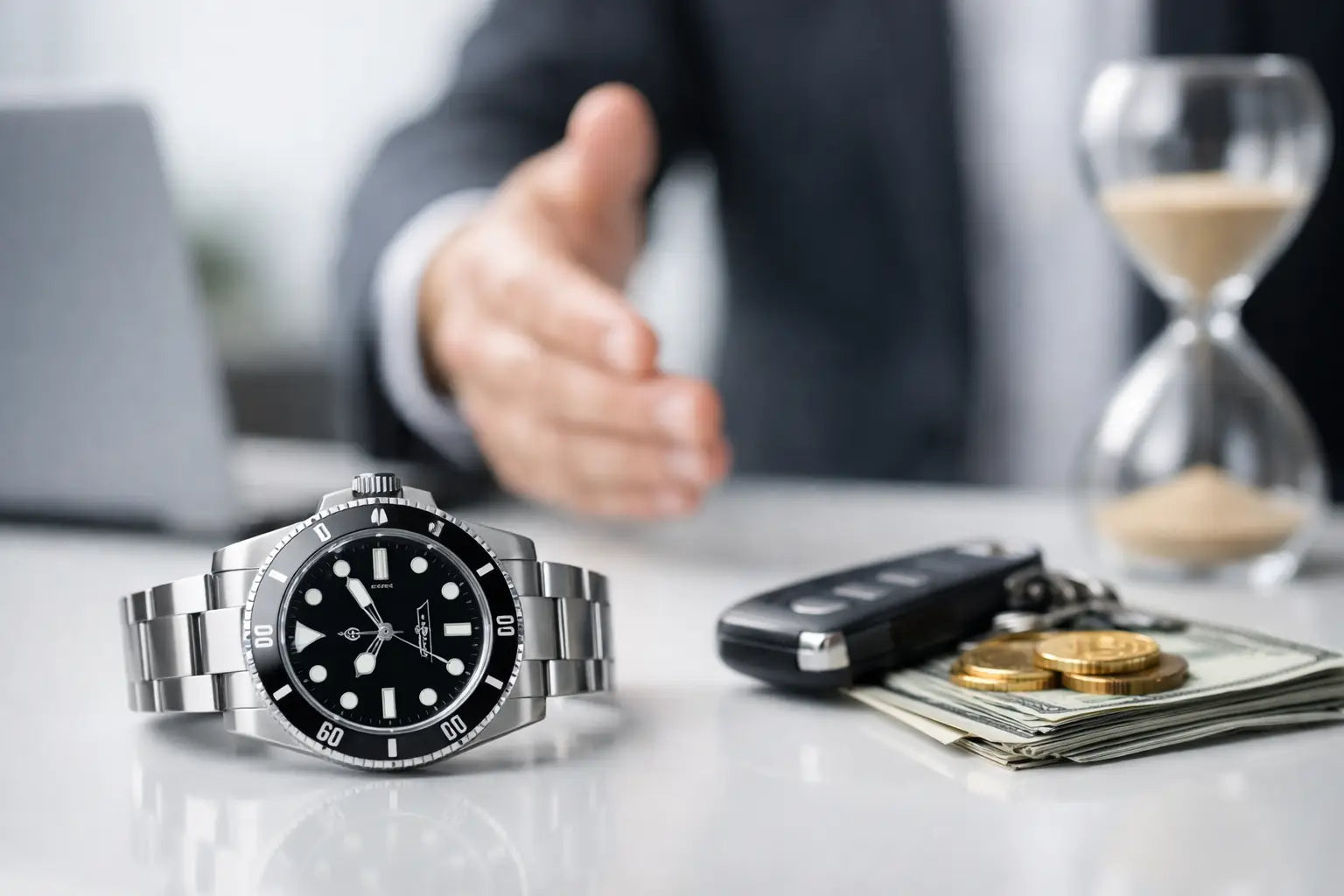
A Rolex can be sold quickly, but speed should not mean accepting the first low offer that appears. Whether you are selling a Submariner, Datejust, GMT-Master II, Daytona or an inherited vintage reference, the aim is straightforward: establish what you have, present it properly and deal with a credible buyer that can pay without delay.
If you are asking how to sell a Rolex fast, the fastest route is usually a direct sale to a specialist watch buyer. Done correctly, it removes the listing process, buyer negotiations, payment disputes and weeks of uncertainty that often come with private marketplaces or auction houses.
Know Exactly What You Are Selling
Before requesting offers, identify the key details of your Rolex. The reference number, serial number or production period, dial configuration, bracelet type and overall condition can all affect the value. A 126610LN Submariner, for example, is assessed differently from an older 16610, while a Datejust with a rare dial or an original full set may command a stronger price than a similar watch without its accessories.
You do not need to become an expert before selling, but clear information allows a buyer to make an accurate initial assessment. Take sharp photographs in natural light of the dial, case, bracelet, clasp and any marks. Include pictures of the box, papers, warranty card, service documentation and spare links where available.
Original paperwork is helpful, particularly for newer Rolex models, but its absence does not stop a sale. Many genuine vintage Rolex watches no longer have their original box and papers. A specialist should assess the watch on its own merits rather than dismissing it simply because a document is missing.
Check the Reference, Not Just the Model Name
“Rolex Submariner” is not enough information for a reliable valuation. References may look similar while carrying very different market values. The reference is commonly found between the lugs on older models, on the rehaut of many modern watches, or on the original warranty card and purchase paperwork.
If you cannot locate it, do not guess. Provide good photographs and let the buyer identify the model. Incorrect details can lead to an inflated estimate that is later reduced when the watch is inspected - exactly the sort of delay a fast sale should avoid.
Get a Market-Aligned Valuation First
A quick sale still deserves a fair offer. Rolex prices move with demand, availability, condition and the particular configuration of the watch. Steel sports models may have strong buyer demand, but the same does not automatically apply to every reference or dial variation. Precious-metal pieces, smaller Datejusts, vintage watches and watches with replacement parts need more careful assessment.
Request a no-obligation valuation from a buyer that actively purchases Rolex watches. A serious specialist will ask sensible questions and explain what is influencing the offer, rather than quoting an unrealistic headline figure to win your enquiry.
Be realistic about the difference between a retail asking price and a direct purchase offer. A dealer advertising a watch for sale must account for authentication, servicing risk, warranty obligations, stock holding, insurance and VAT where applicable. The right question is not “What is the highest price I have seen online?” but “What can I receive, securely, today?”
Do Not Spend Money Preparing the Watch Without Advice
A clean watch photographs better, but avoid polishing, refinishing or servicing it simply to sell unless a specialist advises you to do so. Over-polishing can soften case edges and reduce collector appeal, especially on older references. An unnecessary service may not add enough value to recover its cost, and an incorrect replacement part can create more questions than it solves.
Wipe the watch gently with a soft cloth, remove surface dust and keep every part you have. That includes spare bracelet links, old service papers, bezels, original straps and even damaged boxes. Buyers can decide what matters; once an item has been discarded, it cannot be restored to the set.
Choose the Selling Route That Matches Your Deadline
There are several ways to sell a Rolex, but they are not equal when time, security and net return matter.
Private selling can sometimes achieve a higher headline price, particularly on highly sought-after sports models. It also involves creating an advert, responding to messages, arranging viewings, dealing with timewasters and managing the risk of chargebacks, counterfeit payments or disputes over condition. For most owners, it is not the quickest or lowest-risk route.
Auction houses may suit rare, historically important or exceptionally collectible Rolex watches. However, catalogue deadlines, consignment terms, seller commission and post-sale payment schedules make auctions a poor fit if you need funds within days.
A pawnbroker offers immediate access to cash, but this is a loan secured against the watch rather than a completed sale. It can be useful for short-term borrowing, although interest and the possibility of losing the watch should be considered carefully.
For a straightforward sale, a direct specialist buyer is usually the practical choice. You receive an offer based on the live market, agree the transaction and receive payment once the watch has been checked. Watch Nest provides this route with free valuations, insured collection or postage options, no seller fees and fast bank transfer once the sale is approved.
Make Security Part of the Sale Price
The amount offered matters, but so does how safely you can complete the transaction. A slightly higher offer from an unknown private buyer is not automatically better if it requires you to meet with a valuable watch, post it uninsured or release it before cleared funds are confirmed.
If meeting in person, use a professional showroom or a secure, agreed location. Do not hand over your Rolex in a car park, at a private address or after seeing a screenshot of a bank transfer. A payment screenshot is not proof that funds have arrived.
For postal sales, only use a fully insured service arranged or approved by the buyer. Photograph the watch and its accessories before packing, record the serial number where appropriate and keep all collection or tracking records. A reputable specialist will be clear about when insurance cover begins and what the process looks like from valuation through to payment.
Ask Direct Questions Before You Commit
A legitimate buyer should be comfortable answering practical questions. Ask whether the initial valuation is subject to inspection, how long the inspection takes, whether there are seller fees, how payment is made and what happens if you decline the final offer.
It is also reasonable to ask how the watch will be authenticated and whether the buyer has experience with your specific Rolex. This matters with vintage pieces, where original components, dial condition, bracelet stretch and period-correct details can affect value significantly.
A vague process is a warning sign. Clear terms, insured handling and prompt communication are signs that the buyer is set up to complete transactions properly.
Avoid the Delays That Cost Sellers Money
Most slow Rolex sales are caused by incomplete information, unrealistic pricing or choosing a channel that does not match the seller’s needs. You can avoid all three by providing accurate photographs, including the full set where possible and seeking a specialist offer before listing the watch publicly.
Do not advertise a watch as “mint” if it has noticeable wear, and do not conceal aftermarket diamonds, replacement dials or missing links. These details will be found during inspection. Being open at the start means the buyer can make a realistic offer and complete the purchase without renegotiation.
It also helps to have your identification ready. Regulated professional buyers will need to verify who they are dealing with before paying a substantial sum. Having a valid photo ID and proof of address available keeps the process moving.
When Consignment May Be Better Than a Fast Sale
If you do not need immediate payment and your Rolex is unusual, rare or particularly desirable, consignment may produce a higher final return. The dealer markets the watch to its customer base and handles enquiries, payment and authentication, then pays you after it sells.
The trade-off is time. A consignment watch can take weeks or longer to find the right buyer, and the final sale price is not guaranteed until the transaction is complete. If certainty and quick access to funds are the priority, a direct purchase offer is normally the better fit.
The best fast sale is not the one that simply gets the watch out of your hands first. It is the one where the model is assessed properly, the offer makes commercial sense and the payment arrives through a secure, documented process. Keep the watch and its paperwork together, ask clear questions and choose a buyer whose process is as valuable as their price.