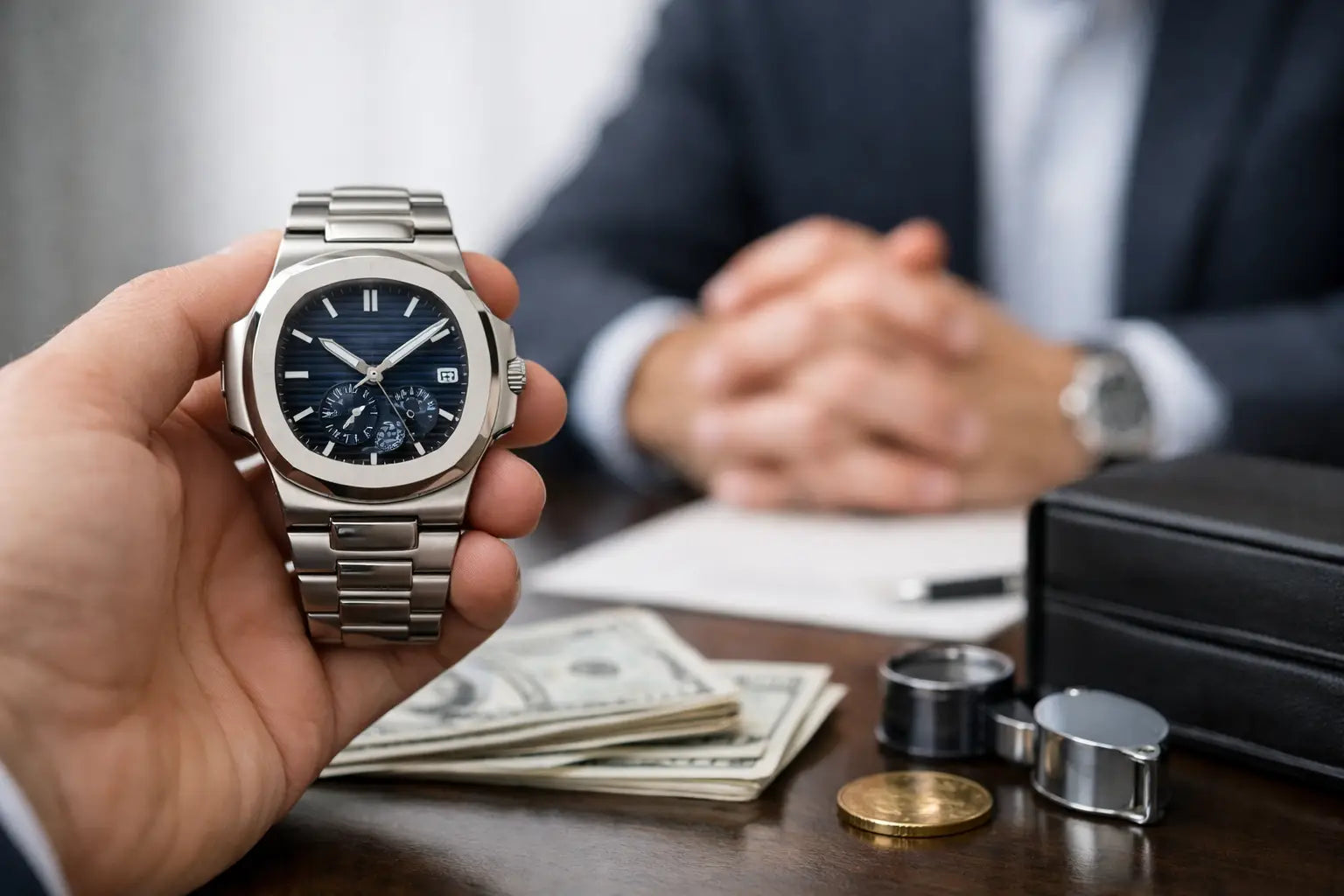
A Patek Philippe is not the sort of watch you want to sell twice. Get the pricing wrong, choose the wrong buyer, or list it in the wrong place, and the difference can run into thousands. If you want to sell Patek Philippe watch models properly, the priority is not just finding a buyer - it is finding a route that gives you a strong net return, quick completion and zero unnecessary risk.
That matters even more with Patek Philippe because values are highly model-specific. A steel sports reference, a precious metal annual calendar, a discontinued Calatrava or a vintage dress watch can each behave very differently in the secondary market. Two watches with similar retail backgrounds can attract very different offers once condition, provenance and current demand are taken into account.
What affects the price when you sell a Patek Philippe watch
The first factor is the exact reference. Demand for a Nautilus or Aquanaut is very different from demand for a classic Calatrava, Gondolo or older complications piece. Within those families, dial configuration, case metal, bracelet type and production period all matter. A sought-after reference in steel with a strong buying audience will usually outperform a less liquid model in gold, even if the original retail price was higher.
Condition is the next major driver. Buyers look closely at case shape, bevels, bracelet stretch, dial originality, service marks and whether the watch has been heavily polished. On modern Patek Philippe pieces, over-polishing can hurt value more than owners expect. On vintage examples, originality becomes even more important. Replacement dials, non-period hands and incorrect crowns can all reduce appetite from serious buyers.
Box and papers also make a measurable difference. A complete set is not always essential, especially for older or inherited watches, but it can strengthen offers and make resale easier for the next buyer. Service history helps too. A recent service from Patek Philippe or a respected independent can support the price, although this depends on model and cost. It is not always worth servicing a watch before sale if the expense will not be recovered in the final offer.
Then there is market timing. Patek Philippe values do not move as one block. Some references remain consistently tradable, while others soften if supply increases or speculative demand cools. A professional buyer will assess not just what a watch sold for in the past, but what it can realistically achieve now.
Sell Patek Philippe watch privately or to a specialist?
Private selling appeals to owners who focus only on headline asking prices. On paper, marketplace listings can look attractive. In practice, the final result is often weaker than expected once negotiation, platform fees, payment risk, insurance, timewasters and buyer disputes are factored in.
This is especially true with high-value watches. A Patek Philippe listed privately can sit for weeks or months. You may need to answer repeated questions, provide extra photos, deal with low offers and arrange meetings with strangers or insured shipping to an unknown buyer. Even if a sale completes, there is still the risk of chargebacks, authenticity disputes or attempted returns.
A specialist buyer offers a different proposition. You receive an expert valuation based on the live trade market, the watch is checked properly, the transaction is insured and payment is made quickly once agreed. For sellers who value certainty, speed and professional handling, that route is usually far more efficient.
The trade-off is simple. A direct purchase prioritises speed and security. If your main goal is to hold out for the absolute highest possible retail result, consignment may be worth considering instead. That takes longer, but it can outperform a straight sale on the right watch.
Why Patek Philippe valuations vary so much
Owners are often surprised when one quote differs sharply from another. That does not always mean one buyer is being unreasonable. It usually reflects differences in business model, stock appetite and market confidence.
A high street dealer may bid cautiously because overheads are high and specialist Patek demand is not their main focus. A general pawnbroker may simply not understand the finer points of a specific reference. An auction estimate can look promising, but the eventual hammer price is uncertain and seller commissions reduce the final amount you receive.
A specialist watch buyer tends to be more accurate because they understand where the watch sits in the current market. They know which references are moving quickly, which configurations are harder to place and what level of margin is realistic. That makes the process more transparent from the start.
How to prepare before you sell
Before requesting a valuation, gather the basics. The reference number, any original paperwork, service records and clear photographs of the watch, clasp, caseback and accessories will help speed up the appraisal. If you are unsure of the exact model, a clear image of the dial and case can often be enough for an initial assessment.
Do not try to improve the watch yourself. Avoid polishing, refinishing or replacing parts without advice. Well-meaning cosmetic work can damage originality and lower the offer. A light clean with a soft cloth is fine. Anything more should be left alone until the watch has been professionally assessed.
It is also worth being realistic about condition. Honest disclosure helps produce an accurate quote early on. Scratches, bracelet wear or missing accessories are not deal-breakers. They are simply part of the valuation.
The safest way to sell a Patek Philippe watch in the UK
For most sellers, safety comes down to three things - insurance, identity and payment. If any one of those is weak, the process becomes unnecessarily risky.
If you are sending the watch by post, it should be fully insured in transit with clear handling procedures. If you are selling in person, the buyer should operate from a professional premises rather than an informal meeting point. Payment should be made by bank transfer from a legitimate business account, with funds cleared before the watch changes hands.
This is where working with an established specialist matters. A proper process removes uncertainty. You know how the watch is being shipped, who is receiving it, how it will be assessed and when you will be paid. That clarity is worth a great deal when the asset on your wrist may be worth more than a car.
Direct sale or consignment - which is right?
If you need funds quickly, a direct sale is usually the right answer. It is faster, cleaner and more predictable. Once the watch is inspected and the offer is accepted, payment can often be made the same day or within 24 hours.
If the watch is particularly desirable, rare or unusual, consignment may produce a higher return. That can make sense for collectors who are not in a rush and are prepared to wait for the right end buyer. The trade-off is time. Consignment is not instant liquidity, and the final outcome depends on how quickly the watch sells.
For many owners, the best route depends on the watch itself. A mainstream, highly liquid Patek Philippe may attract a strong direct offer. A niche or exceptional piece may justify a consignment conversation. A good buyer should be able to advise honestly on both.
Common mistakes sellers make
The biggest mistake is anchoring to unrealistic online asking prices. Unsold listings are not evidence of market value. Serious valuations are based on achieved prices, current dealer demand and the watch’s actual condition.
Another common error is choosing the first route that looks easy without checking the net result. Auction houses, online marketplaces and part-exchange deals can all sound convenient until fees, delays or weak offers become clear.
Some sellers also wait too long because they expect every Patek Philippe to rise indefinitely. Some references hold exceptionally well. Others are more cyclical. If you already know you want to sell, chasing last month’s peak can be counterproductive.
What a good selling process should look like
A strong process is straightforward. You submit the details, receive an initial valuation, arrange inspection either in person or by insured post, and then get a final confirmed offer after the watch is checked. If you accept, payment follows quickly. No listing fees, no haggling with strangers, no drawn-out uncertainty.
That is why many UK sellers choose a specialist such as Watch Nest. The appeal is simple - expert appraisal, insured handling, no seller fees and fast payment without the usual friction of private selling.
When you sell a Patek Philippe watch, the right outcome is not just the highest number on paper. It is the strongest genuine offer from a buyer who can complete quickly, securely and without complications. If you can achieve that with confidence, you have sold well.