Authenticity matters to sellers just as much as to buyers. If you inherited a watch, bought one privately years ago, or simply never questioned a gift, you may not be certain it is genuine — and that uncertainty can make selling feel risky. The good news is that a credible buyer expects to verify authenticity as part of the process, so you do not need to be an expert. It helps, though, to understand what the checks involve.
This guide explains the signs that often reveal a counterfeit, why appearances alone are never conclusive, and how professional authentication actually works.
What counterfeiters tend to get wrong
Fakes have improved, but they still struggle with the things that are hardest to copy. Weight and feel are common giveaways: genuine luxury watches use quality materials and solid construction, so a piece that feels light or hollow is a warning sign. Dial printing is another — authentic dials have crisp, perfectly aligned text and logos, whereas fakes can show slightly blurred or uneven printing under magnification.
The movement is the biggest tell of all. Genuine mechanical watches contain finely finished movements with correct markings and smooth operation, while many counterfeits hide cheap movements that look wrong the moment a caseback comes off. Other details that often fail on fakes include the date magnification, the engraving around the inner bezel, the quality of the caseback, and the consistency of serial and reference numbers with the model.
Why you cannot always tell by looking
Some counterfeits are convincing enough to fool a casual glance, and a few components may even be genuine parts fitted to an otherwise fake watch. This is why a single clue is never proof on its own. A real evaluation looks at the whole watch — case, dial, hands, movement, numbers and the way they relate to one another — rather than fixating on one feature.
Paperwork helps, but it is not proof
Box and papers support a watch's story and can strengthen value, as we explain in our guide on whether box and papers matter. But documents can be copied or mismatched, so genuine paperwork is reassuring rather than conclusive. Equally, a genuine watch is not fake just because the papers were lost over the years — plenty of authentic pieces, especially older or inherited watches, have no surviving documentation. The watch itself is the primary evidence.
What to do if you are not sure
If you have doubts, do not try to force a conclusion from internet photos or strip the watch yourself. Gather what you have — the watch, any paperwork, and clear photos of the dial, caseback and any numbers — and have it assessed by a professional who inspects watches in hand every day. Avoid private buyers who pressure you to complete a sale before the watch has been properly checked.
How professional authentication works
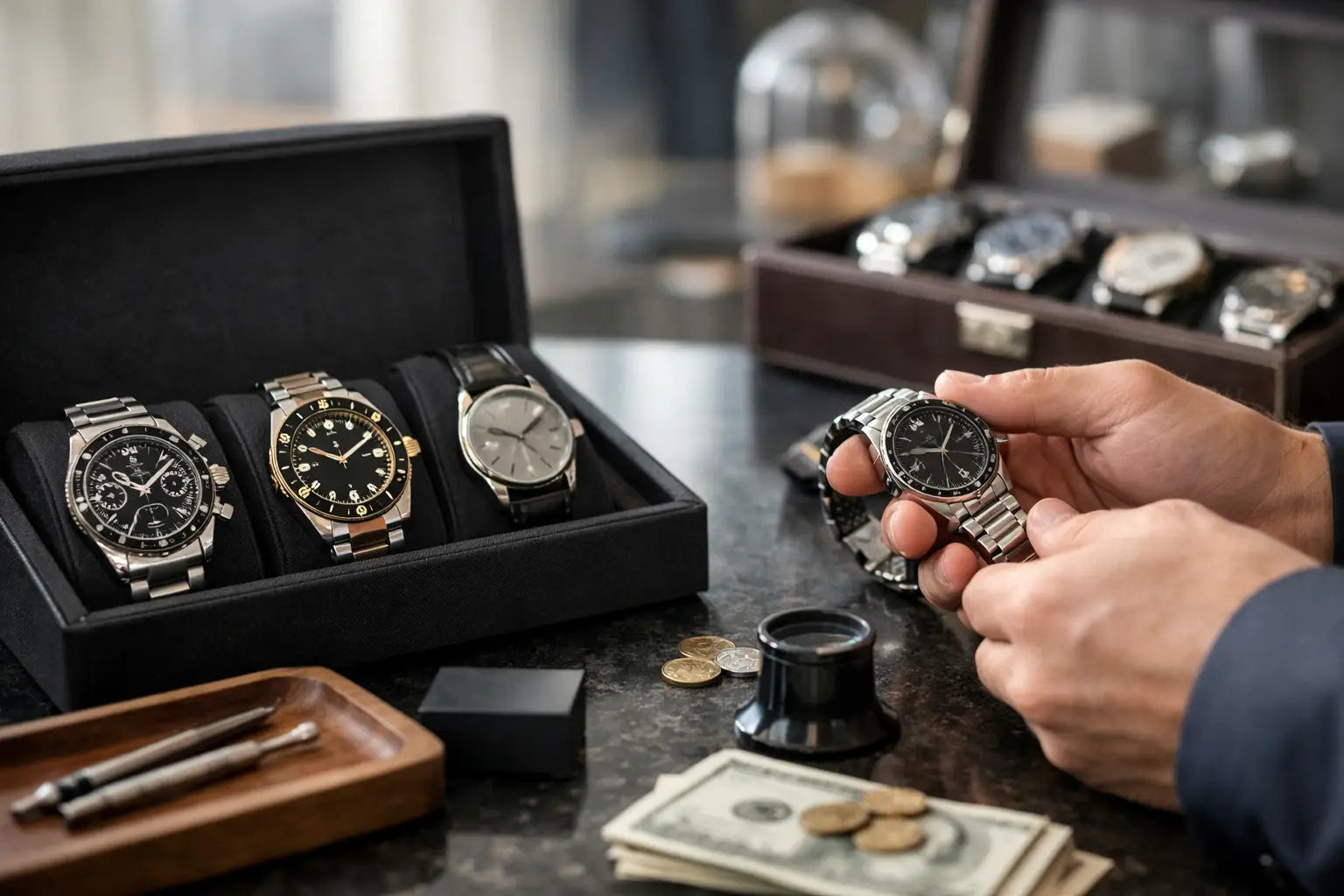
A specialist buyer verifies a watch through direct inspection: examining the movement, checking numbers against the model, assessing finishing and comparing the piece to known genuine references. At Watch Nest, every watch we receive is opened and recorded on camera, so the inspection is documented and the condition on arrival is never in dispute. That protects both sides and gives you confidence that the assessment is being done properly rather than taken on trust.
Honesty matters here: no responsible buyer can guarantee authenticity from photographs alone. A reliable opinion comes from inspecting the watch in hand. If you would like to understand how we evaluate watches, our how we value page sets out the approach.
Selling with confidence
If you are ready to find out what you have, start with a free valuation. Send clear photos and whatever details you know, and we will tell you honestly what we can establish and what needs an in-hand check. Whether your watch turns out to be a sought-after genuine piece or something more modest, you will know where you stand — and you will be dealing with a buyer who verifies openly and pays fairly.