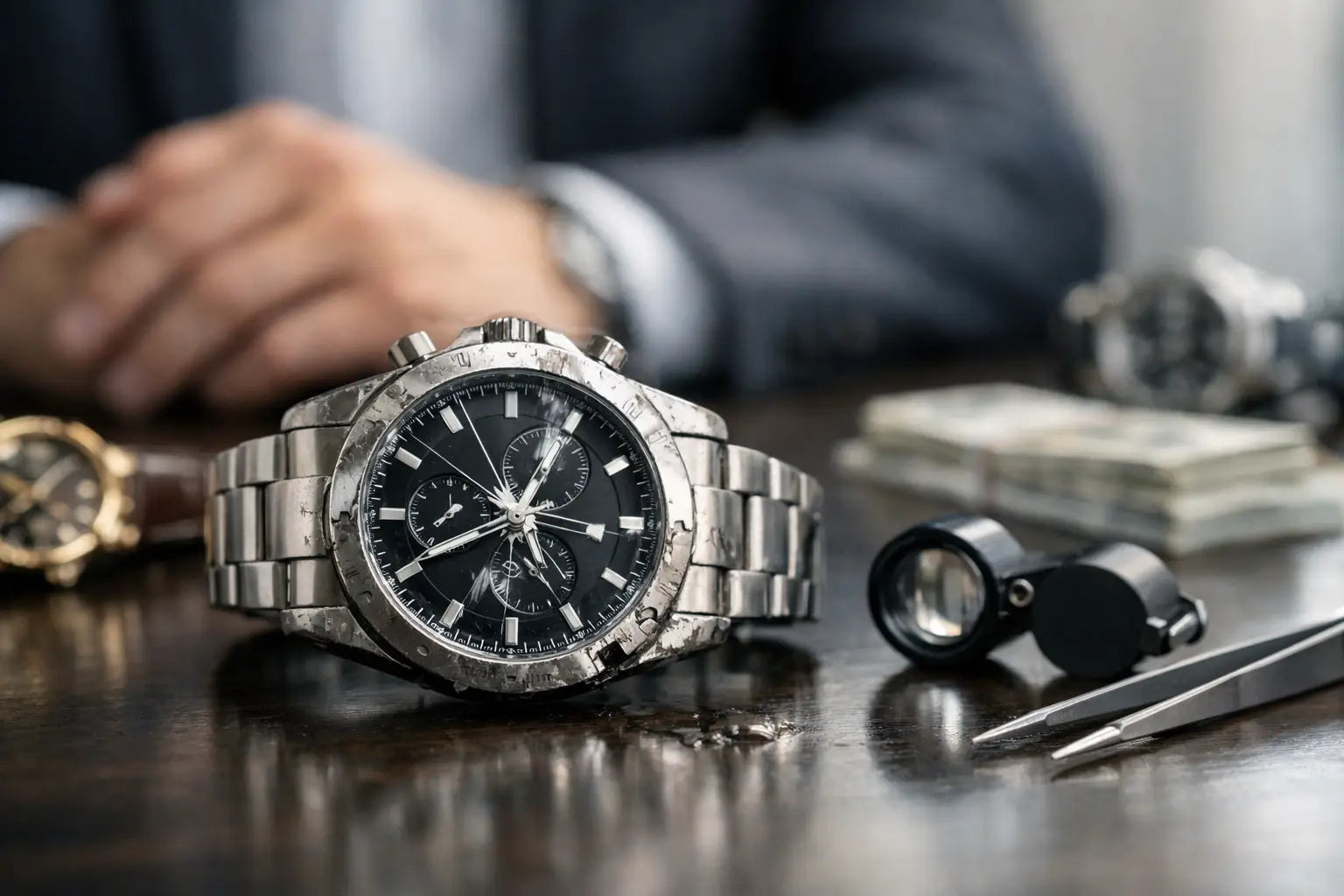
A cracked crystal, seized movement or badly worn bracelet can make an expensive watch feel difficult to sell. But selling damaged luxury watches does not automatically mean accepting a scrap-value offer. Rolex, Omega, Tudor, Cartier, Breitling and Patek Philippe watches can retain meaningful value with faults, particularly where the reference, dial, case and original components remain desirable.
The key is understanding what is damaged, what can be repaired, and whether repair is commercially worthwhile before you sell. A specialist buyer will assess the whole watch, not just the fault in front of them.
What Counts as Damage on a Luxury Watch?
Damage ranges from straightforward cosmetic wear to faults that materially affect a watch's value or usability. Light scratches, bracelet stretch and a tired crystal are very different from water ingress, a heavily polished case or a non-running movement.
A watch can also be described as damaged when it has missing parts. Lost links, a missing crown, absent bezel insert, damaged clasp or aftermarket replacement bracelet may reduce the offer, but they do not necessarily prevent a sale. The same applies to inherited watches that have not been worn or serviced for years.
The condition that matters most depends on the model. A modern Rolex Submariner with a chipped ceramic bezel and running movement may be relatively simple to assess. A vintage Omega Speedmaster with moisture damage requires closer inspection, because the condition and originality of its dial, hands and movement can matter far more than the cost of a routine repair.
How Damage Affects the Value of a Watch
There is no fixed percentage reduction for a damaged watch. Buyers consider the likely cost of repair, the risk involved, the availability of parts and the resale demand for the specific reference.
Cosmetic faults are often the most manageable. Scratches to the case or bracelet, a marked clasp and a worn crystal can usually be addressed, although excessive polishing is another matter. Sharp case lines, original finishing and correct proportions are valued by collectors, especially on vintage Rolex, Patek Philippe and Audemars Piguet pieces. A heavily over-polished case cannot always be restored.
Mechanical damage has a wider range of outcomes. A watch that simply needs a service is not the same as one with corrosion, a broken balance staff, missing movement components or evidence of water ingress. Modern manufacture movements can be expensive to repair if proprietary components are required. Older watches may need parts that are difficult to source, even where the fault itself appears minor.
Originality also affects the calculation. An original but aged tritium dial can be more valuable than a bright replacement dial fitted during a past service. Similarly, original hands, bezels, crowns and bracelets may carry a premium. That is why a buyer should not judge a damaged watch from a single photograph or assume that visible age is always a negative.
Should You Repair a Damaged Watch Before Selling?
Often, no. Spending money on a repair before obtaining a professional valuation can leave you out of pocket. The work may cost more than it adds to the sale price, particularly if the repair is cosmetic or the buyer would prefer to manage restoration themselves.
Servicing through a brand can be sensible when you intend to keep the watch. For a sale, however, it can be costly and may involve replacing original parts that a collector would rather retain. Brand service centres may also decline work on older models or insist on replacement components as part of the process.
There are exceptions. If a watch needs a battery, a simple pressure test or a replacement spring bar to be safely inspected, a small repair can be practical. A broken bracelet that makes the watch impossible to wear may also be worth addressing if the correct part is readily available. But do not authorise major work based on an assumed value.
The sensible route is to request an appraisal first. Be clear about the fault, provide sharp photographs and disclose any previous repair history. A credible buyer can explain whether selling as-is or repairing first is likely to produce the stronger net result.
Details That Help You Get a Fair Offer
A damaged watch should be presented honestly, not made to look better than it is. Wiping away surface dirt is fine. Do not attempt home polishing, open the case back, use glue on loose parts or expose the watch to water to test it. These quick fixes can create a bigger problem and make professional assessment harder.
When requesting a valuation, include the brand, model or reference number, approximate age, material and any known issue. Good photographs should show the dial, case sides, case back, bracelet, clasp and damaged area. If the watch runs, state whether it keeps time reasonably well. If it does not run, say so rather than guessing why.
The box, papers, service paperwork, spare links and original parts can all support value. They are not essential for every sale, and a missing box does not make a desirable watch unsellable. Still, any paperwork that confirms provenance, servicing or replacement parts gives the buyer a clearer basis for an offer.
For collections and estate watches, separate each piece where possible and avoid discarding loose straps, buckles, links or papers. What looks insignificant may belong to a specific watch and have real value.
Selling Damaged Luxury Watches Without Private-Sale Risk
Private marketplaces can look attractive because you set the asking price. In reality, damaged luxury watches are among the hardest pieces to sell privately. Buyers will rightly ask detailed questions, request extra photographs and challenge condition. A dispute over whether a watch was described accurately can delay payment or result in a return.
Auction is not always the answer either. It may take weeks or months, the final hammer price is uncertain, and seller charges reduce the amount you receive. A damaged watch can be particularly difficult at auction if the catalogue description cannot fully establish the extent of the fault.
A direct specialist sale gives you a clearer route. The buyer can inspect the watch, account for repair costs and market demand, then make a firm offer without the uncertainty of a private buyer changing their mind. The right buyer will also be interested in watches outside the obvious headline brands, including vintage pieces, niche references and enthusiast models.
At Watch Nest, valuations are free and without obligation. You can sell in person at the London showroom or use a fully insured postal option from anywhere in the UK. Once the watch has been inspected and the offer agreed, payment can be made by instant bank transfer, typically the same day or within 24 hours. There are no seller fees to take from the agreed price.
When Consignment May Be Better Than a Direct Sale
A direct sale is usually best when speed, certainty and a straightforward transaction matter most. It is also the practical option when the watch needs work and you do not want to fund or manage the repair process yourself.
Consignment can suit a different situation: a rare, collectable or high-value watch where the likely selling price may justify a longer wait for the right buyer. This is particularly relevant for unusual vintage references, scarce dial variants or watches with strong provenance. It is not guaranteed to produce more money after commission and time on the market, so the decision should be based on realistic pricing rather than an optimistic asking figure.
Questions to Ask Before You Sell
Before handing over a damaged watch, ask how the buyer has assessed the fault, whether the offer is subject to inspection, and whether there are any fees or deductions. Confirm how the watch is insured in transit and when payment will be sent after approval.
You should also be wary of offers that seem unusually high but depend on vague conditions. A transparent buyer will explain the process, request relevant details and make clear what could change after a physical inspection. Strong market-aligned pricing is more useful than an inflated online estimate that disappears once the watch arrives.
A damaged luxury watch still has a story, components and market demand behind it. Get a clear appraisal before paying for repairs or accepting the first low offer, and you can sell with a realistic view of its worth and a secure route to payment.