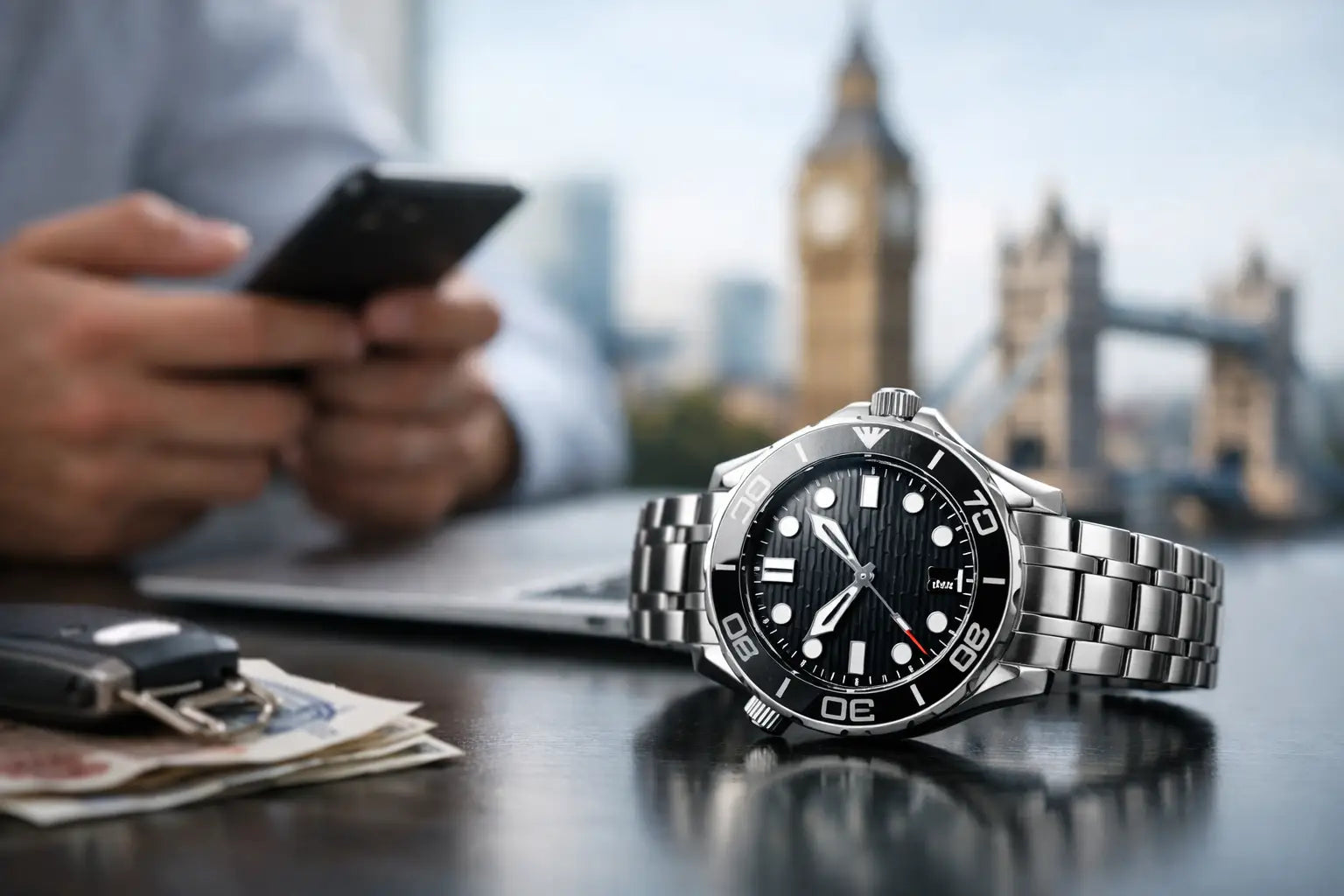
A Seamaster can be worth anything from a modest four-figure sum to significantly more, depending on the reference, condition and demand. If you need to sell Omega Seamaster quickly, the challenge is not simply finding a buyer. It is finding a legitimate specialist who understands exactly what they are assessing and can make a fair, firm offer without weeks of messages, marketplace fees or payment risk.
Omega has produced the Seamaster in many forms over decades. A modern Diver 300M, a Planet Ocean, an Aqua Terra, a vintage Seamaster 300 and a James Bond edition do not trade in the same way. Selling quickly should not mean accepting the first low offer from a pawnbroker or listing it privately and hoping the right buyer appears.
What Determines Your Omega Seamaster's Value?
The reference number is the starting point. It identifies the exact model, specification and production era, allowing a buyer to compare your watch against recent market activity rather than relying on broad estimates. This number is usually engraved on the caseback, shown on the warranty card or found in the paperwork supplied with the watch.
For modern Seamasters, demand often centres on the Diver 300M, Planet Ocean and Aqua Terra ranges. Details such as case size, dial colour, bracelet or strap configuration, precious-metal content and limited-edition status can all affect the offer. A blue-dial Diver 300M, for example, may have a different resale profile from a black ceramic model or a special 007 release, even where retail prices are broadly similar.
Condition matters, but it needs to be judged sensibly. Light wear from normal use is expected on a pre-owned watch. Heavy case polishing, deep scratches, bezel damage, moisture issues, a stretched bracelet or a non-functioning movement can reduce value or require an allowance for repair. Vintage pieces need even more care. Original dials, hands, bezels and crowns can be highly desirable, so an over-restored vintage Seamaster is not always worth more than an honest, unpolished example.
A complete set usually helps. The original box, warranty cards, instruction booklets, spare bracelet links and service paperwork make a watch easier to resell and can strengthen an offer. That said, do not assume a watch without its box and papers is difficult to sell. Many excellent vintage and inherited Omega watches are sold watch-only. A specialist can still value them properly from the reference, serial information, photographs and physical inspection.
How to Sell Omega Seamaster Quickly Without Cutting Corners
Speed comes from preparation and from choosing the right selling route. Before requesting a valuation, take clear photographs of the dial, caseback, bracelet, clasp, sides of the case and any accessories. Include the warranty card and service records if you have them. Natural light is usually enough. The aim is not to produce a glossy advert but to give the buyer a truthful first view of the watch.
Be precise about the watch's history. Say whether it has been serviced, whether it is keeping time, whether it has been polished, and whether there are known faults. A clear description allows a specialist to provide a more reliable indication of value and prevents delays later. Concealing a problem rarely improves the result - it simply creates a reason for a buyer to revise an offer after inspection.
The fastest professional process is straightforward: submit the model details and photographs, receive a no-obligation valuation, agree the offer, then complete the sale in person or through an insured postal service. Once the watch has been checked against the description, payment can be made by bank transfer on the same day or within 24 hours, depending on the agreed arrangements.
For sellers who want a direct purchase rather than a drawn-out listing, Watch Nest offers free valuations, no seller fees and fully insured options for posting or completing the sale in person. That matters when the goal is to turn a valuable watch into cleared funds quickly, without handing control of the transaction to an unknown private buyer.
Private Sale, Auction or Direct Buyer?
A private sale can occasionally achieve the strongest headline price, particularly for a rare Seamaster with a collector following. It also requires the most work. You will need to photograph the watch, set a realistic asking price, answer enquiries, negotiate, vet buyers, arrange delivery or a meeting, and manage the possibility of chargebacks, disputes or fraudulent payment attempts. Marketplace commissions and insured delivery costs can also materially reduce the amount you receive.
Auction is better suited to an unusual vintage reference, a scarce military model or a watch with notable provenance where competitive bidding may create a premium. It is less suitable if time is critical. Catalogue deadlines, auction dates, seller's commission and the uncertainty of the hammer price can make it a slow route for an otherwise straightforward modern Seamaster.
A direct sale to a specialist is normally the practical choice when certainty, security and speed matter most. The offer may not match an ambitious private-sale asking price, because the buyer takes on stock, authentication, warranty and resale risk. But a strong market-aligned offer with no seller fees, no advertising costs and prompt payment can produce a better net result than a higher figure that never completes.
Avoid the Common Delays That Cost Sellers Money
The most common delay is pricing a watch from retail price or an online listing rather than completed market sales. A Seamaster bought new for several thousand pounds may be highly desirable, but that does not mean every advertised price is achievable. Some listings remain unsold for months because their owners have priced for sentiment rather than the market.
Another mistake is paying for unnecessary cosmetic work before seeking a valuation. A polished bracelet or refinished case can look cleaner, but original edges and factory finishing are valuable to many buyers. Ask for an appraisal first. If servicing or repair is needed, an experienced buyer can explain whether it is likely to improve the sale price enough to justify the cost.
Missing links, cards and boxes should be disclosed early rather than treated as a last-minute issue. If the bracelet is too short for a buyer, replacement links can be expensive. Likewise, a lost warranty card may not stop a sale, but it should be reflected in the valuation from the outset.
Finally, do not post a high-value watch uninsured or send it to an unverified address. Use a selling partner with a clear process, appropriate insurance and a traceable payment method. A quick sale is only a good sale when the watch is protected and the money arrives safely.
When Consignment May Be Worth the Wait
If your Seamaster is scarce, exceptionally well preserved or accompanied by desirable provenance, consignment may be worth considering. This route gives a specialist time to market the watch to the right audience, potentially producing a higher return than a direct purchase. It is not the best option for everyone, as payment depends on the eventual sale and the timeframe is less predictable.
For a current-production Diver 300M or a standard Planet Ocean, a direct offer is often more efficient. For a vintage Seamaster 300, a limited-edition Bond model or an unusual dial configuration, the extra exposure from consignment can justify waiting. The right decision depends on whether your priority is immediate liquidity or the highest possible eventual proceeds.
Have These Details Ready for a Faster Offer
A buyer can move far more quickly when you provide the reference number, clear images, an honest condition description and details of the box, papers, spare links and service history. If the watch was inherited, include anything you know about its age or previous ownership, but do not worry if the history is incomplete. The watch itself remains the key evidence.
Remove personal details from documents before sharing photographs, but retain the originals until the transaction is agreed. Never give out full card numbers publicly. A reputable buyer may need to inspect paperwork to confirm authenticity and provenance, but should handle that information discreetly.
A fair Seamaster sale should feel clear from the first valuation to the final bank transfer. Get the watch assessed on its actual specification and condition, choose a route that matches your timescale, and keep the process insured from start to finish. That is how to sell quickly without allowing urgency to dictate the price.