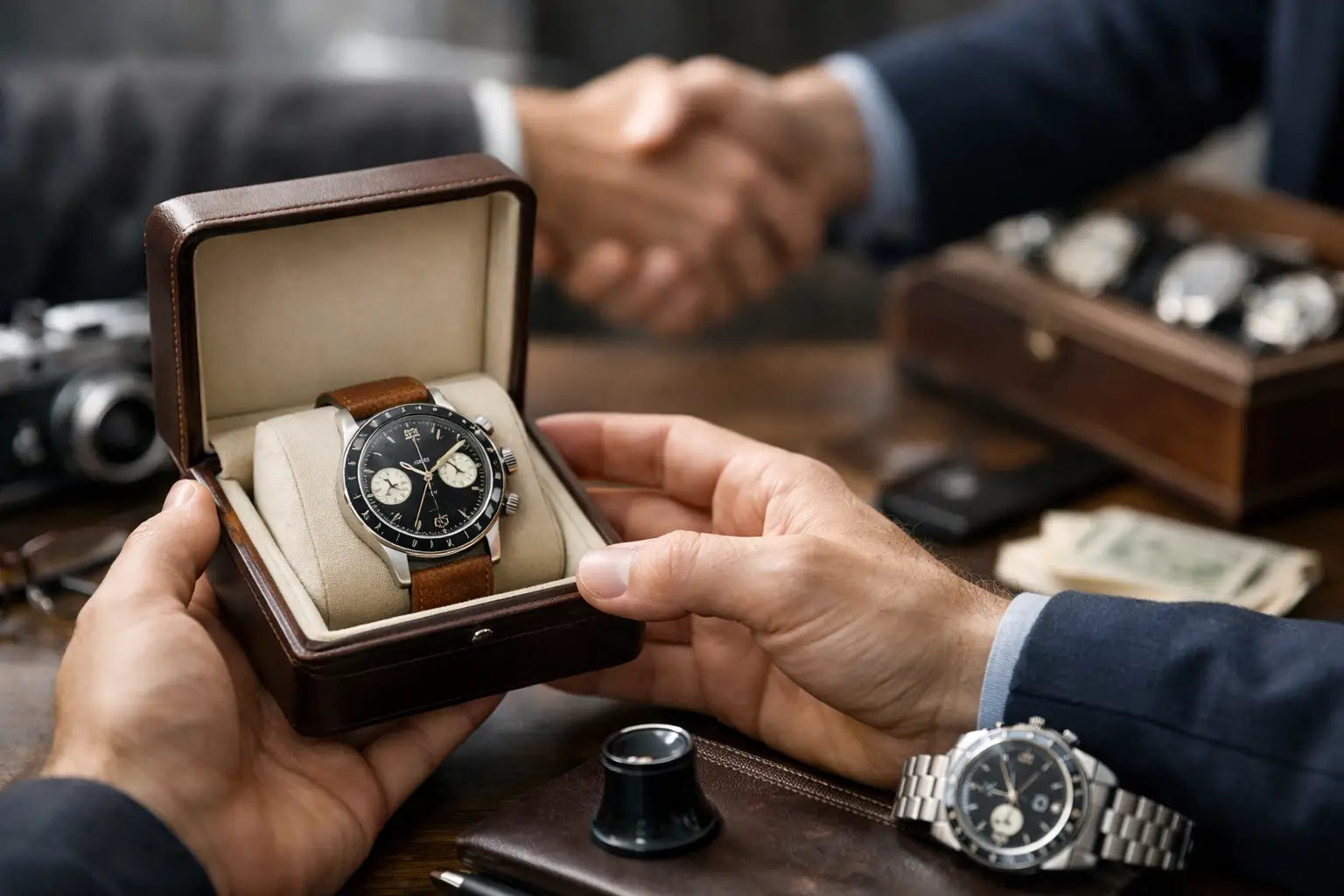
A vintage watch can look modest on the wrist yet carry serious value. An original 1960s Omega, early Rolex Datejust, Tudor Submariner or uncommon British military issue may be worth far more than an owner expects. Equally, a replacement dial, heavy polishing or incorrect hands can materially affect the price. That is why choosing experienced vintage watch buyers matters: the right buyer sees the details that make a watch desirable, not simply the name on the dial.
For many owners, the decision to sell follows an inheritance, a change in collecting tastes or the simple wish to release funds without months of back-and-forth. A professional sale should be straightforward - clear valuation, insured handling, no seller fees and payment without unnecessary delay. The key is understanding what a serious buyer will assess before accepting an offer.
What Vintage Watch Buyers Look For
Vintage watches are not valued in the same way as current production models. A modern watch may be judged largely by reference, age, condition and market availability. With vintage pieces, originality, period correctness and provenance can be just as important as the movement itself.
The dial is often the first area of attention. Patina can be highly desirable when it is natural and even, particularly on tritium dials that have developed a warm cream tone. However, moisture damage, repainting or poorly executed restoration may reduce collector appeal. Original hands, bezel inserts, crowns and pushers also matter. A watch with honest wear and correct components can command more than a heavily restored example that appears newer but has lost its character.
Case condition deserves the same scrutiny. Vintage cases have often been polished several times over decades of ownership. Light refinishing is not automatically a problem, but soft lugs, rounded case edges and faded engravings can affect value. Experienced buyers compare the watch against known examples from the same reference and production period rather than making assumptions from photographs alone.
Movement condition and running performance also influence an offer. A watch does not need to be freshly serviced to sell well, but a movement with corrosion, incorrect parts or a poor-quality repair may require costly work. A specialist should allow for this transparently rather than using it as a vague reason to reduce a price at the last moment.
Finally, demand matters. Certain references have deep collector markets, while lesser-known models can still be highly appealing if they are scarce, well preserved or unusual. Vintage Omega Seamasters, Rolex Explorers, Heuer chronographs, early Tudors and military-issued watches all attract different types of buyer. The value lies in the exact watch, not only the brand.
How to Get a Fair Vintage Watch Valuation
A credible valuation starts with accurate information. If possible, provide clear photographs of the dial, case, caseback, bracelet, clasp and movement. Include the reference and serial number where visible, along with any service papers, original box, warranty booklet, receipts or family history. Do not worry if you do not have everything. Many genuine vintage watches have lost their original paperwork over time, and their absence does not prevent a sale.
Be honest about what you know. If the watch has stopped, has been stored in a drawer for years or has a cracked crystal, say so at the outset. This helps the buyer give a realistic indication and avoids a wasted journey or a revised offer caused by undisclosed issues. A stopped vintage watch may need only routine servicing, but it can also indicate a more substantial mechanical problem.
It is sensible to compare more than one route to market, but compare net proceeds rather than headline figures. A private sale may appear to offer the highest return, yet it can involve marketplace charges, payment risk, buyer disputes, returns and the challenge of proving a watch is authentic and as described. Auction can suit particularly rare pieces with strong collector interest, but seller commission, insurance, catalogue deadlines and payment waits all reduce the amount and speed of the final return.
A direct specialist purchase is usually the strongest option when certainty and speed matter. The buyer takes on the resale risk, handles authentication and pays an agreed amount once the watch has been inspected. Consignment can be worth considering where a watch is exceptional, highly collectible or likely to benefit from patient marketing. It may achieve a higher result, but it is not the right choice for everyone because payment depends on a future sale.
Do not spend money on restoration too soon
One of the most expensive mistakes is commissioning restoration before obtaining advice. Replacing an aged dial, reluming hands or aggressively refinishing a case may make a watch look cleaner, but collectors can prefer untouched original condition. Even a routine service can involve replacement parts unless instructions are explicit.
If a watch needs attention, ask for an assessment first. In some cases, sympathetic servicing will protect both wearability and value. In others, leaving the watch exactly as found is the better commercial decision. It depends on the model, the fault and the level of originality already present.
Questions Worth Asking a Buyer
The best vintage watch buyers are clear about process, not just price. Before handing over a valuable timepiece, establish how it will be authenticated, how it will be insured and when funds will reach your account. A professional buyer should be comfortable explaining each stage in plain terms.
Ask whether the valuation is subject to physical inspection and what could cause it to change. This is normal for vintage watches, where details cannot always be confirmed from images. What matters is whether the buyer gives specific reasons. An offer should not be reduced simply because a buyer hopes to improve their margin after you have committed to the sale.
You should also confirm whether there are any fees. Some routes quote an attractive estimate before deducting seller commission, photography costs, collection charges or insurance. A direct purchase should state the amount you will receive, with no hidden deductions. If you are posting the watch, use a fully insured method arranged by the buyer and retain proof of collection until payment is complete.
For inherited watches, discretion can be especially important. A reputable specialist will handle the conversation sensitively, explain the available options and avoid pressuring an executor or family member into a rushed decision. Where several watches are involved, a collection appraisal can help identify which pieces are best sold directly and which may merit consignment.
A Safer Way to Sell a Vintage Watch
The practical process should be uncomplicated. Start with a no-obligation valuation based on photographs and details. If the initial figure is suitable, arrange a secure inspection in person or send the watch by insured post. Once the watch has been checked for authenticity, condition and originality, the buyer confirms the final offer and pays by bank transfer.
For sellers who can visit London, a showroom appointment offers the benefit of face-to-face inspection and immediate clarity. For owners elsewhere in the UK, an insured postal service removes the need to travel while keeping the transaction protected. Neither option should involve pressure to proceed.
Watch Nest buys vintage watches across the market, from well-known Rolex and Omega references to unusual enthusiast models and inherited pieces with limited paperwork. The focus is on a fair, informed assessment and fast payment once an agreed sale is complete.
Keep the watch, its bracelet, spare links and every related item together until it has been valued. Take a few clear photographs before it leaves your possession, avoid polishing it, and choose a buyer whose offer, insurance and payment terms are all easy to understand. A vintage watch has already had a long life; selling it well means placing its value in the hands of someone who knows exactly what they are looking at.